Exacta, Trifecta and Superfecta: Mechanics, Costs and UK Payout Data
 Available in US
The first Trifecta I ever landed paid 847 pounds from a one-pound stake. I had backed three horses at a midweek Kempton meeting — a strong front-runner keyed on top, two closers underneath — and watched them cross the line in precisely the order I had written on my slip. The Computer Straight Tricast for the same finishing order paid 624 pounds. Same race, same result, a 36% gap between the pool payout and the algorithmic fixed-odds equivalent. That single result taught me more about the structural value in Tote exotic markets than anything I had read up to that point.
An analysis of 1,011 UK races confirms that my experience was not a fluke. Tote Trifecta dividends average roughly 26% more than Computer Straight Tricast payouts, and the Trifecta pays better in four out of every five races studied. The edge is real, it is measurable, and it is available to anyone who understands the mechanics well enough to exploit it.
This guide covers the three order-dependent exotic bets that form the backbone of UK pool betting: the Exacta (first two in order), the Trifecta (first three in order), and the Superfecta (first four in order). Each has its own cost profile, its own strategic logic, and its own relationship to the fixed-odds alternatives. I will walk through how they work, what they cost when you box or wheel them, and what the payout data says about where the value actually sits.
Table of Contents
- How the Exacta Works: First and Second in Exact Order
- Trifecta Mechanics: Picking the First Three Home
- Superfecta: Four in Order and Why Payouts Explode
- Quick Cost Guide: What a Boxed or Wheeled Exacta, Trifecta or Superfecta Runs
- Payout Data: Tote Exotic vs Computer Straight Forecast/Tricast
- When to Bet Exacta, When Trifecta, When Superfecta
- Exacta, Trifecta and Superfecta: Your Questions
How the Exacta Works: First and Second in Exact Order
Two horses across the line, your order, no room for error. That is the Exacta in one sentence — but the simplicity of the concept hides the richness of the betting opportunities it creates.
The Exacta asks you to name the first and second finishers in the correct order. Horse A first, Horse B second. If they finish in reverse order, you lose. If a third horse splits them, you lose. The bet is order-dependent, which is what separates it from a Quinella (any order) and what makes the payouts larger than a straight win bet on either individual horse.
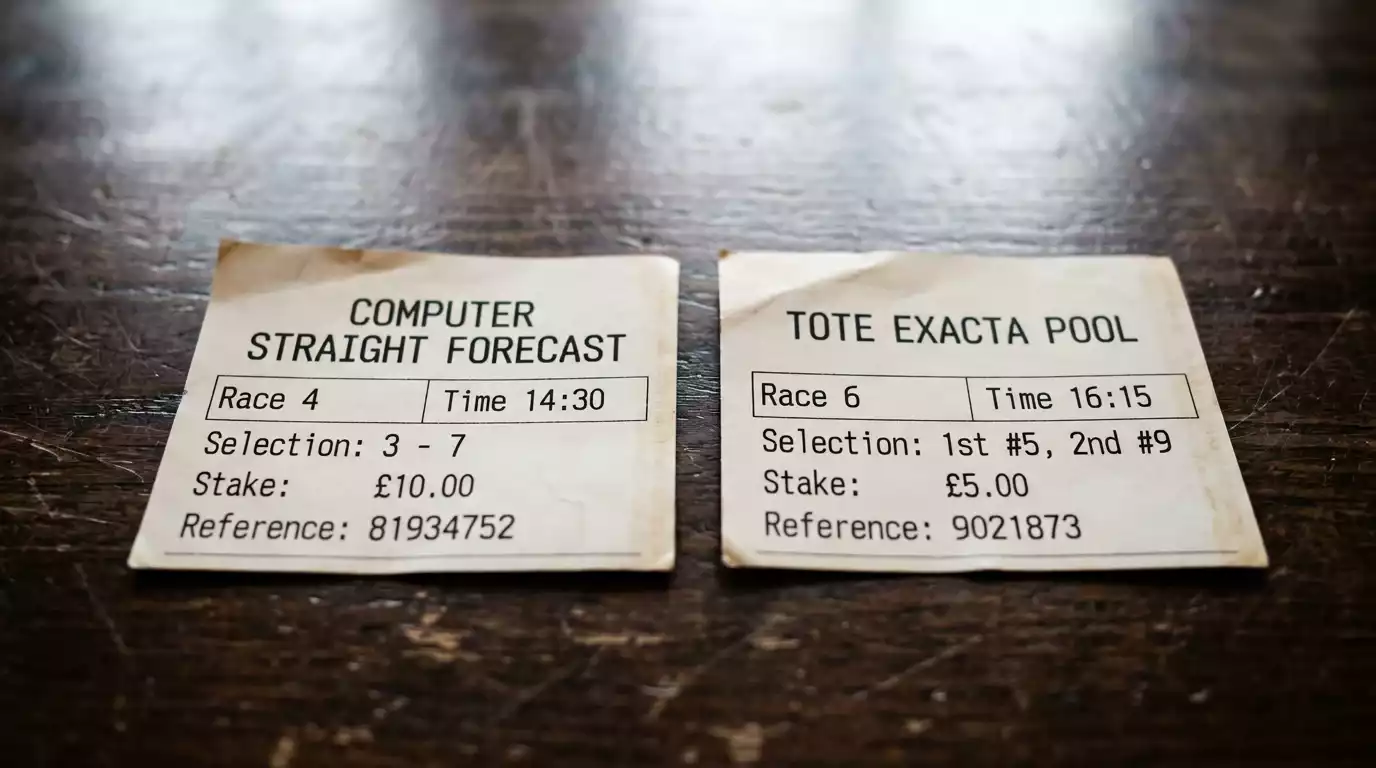
In the UK, the Exacta exists in two forms. The Tote Exacta is a pool bet — your stake goes into the Exacta pool, commission is deducted, and the remaining net pool is shared among winning unit holders. The Computer Straight Forecast (CSF) is the fixed-odds equivalent offered by bookmakers — an algorithmically calculated payout based on the starting prices of the first two finishers. The two products cover the same outcome but use completely different pricing mechanisms, and that difference is where value emerges. For a deeper look at how Tote pool mechanics shape exotic dividends, see our dedicated guide.
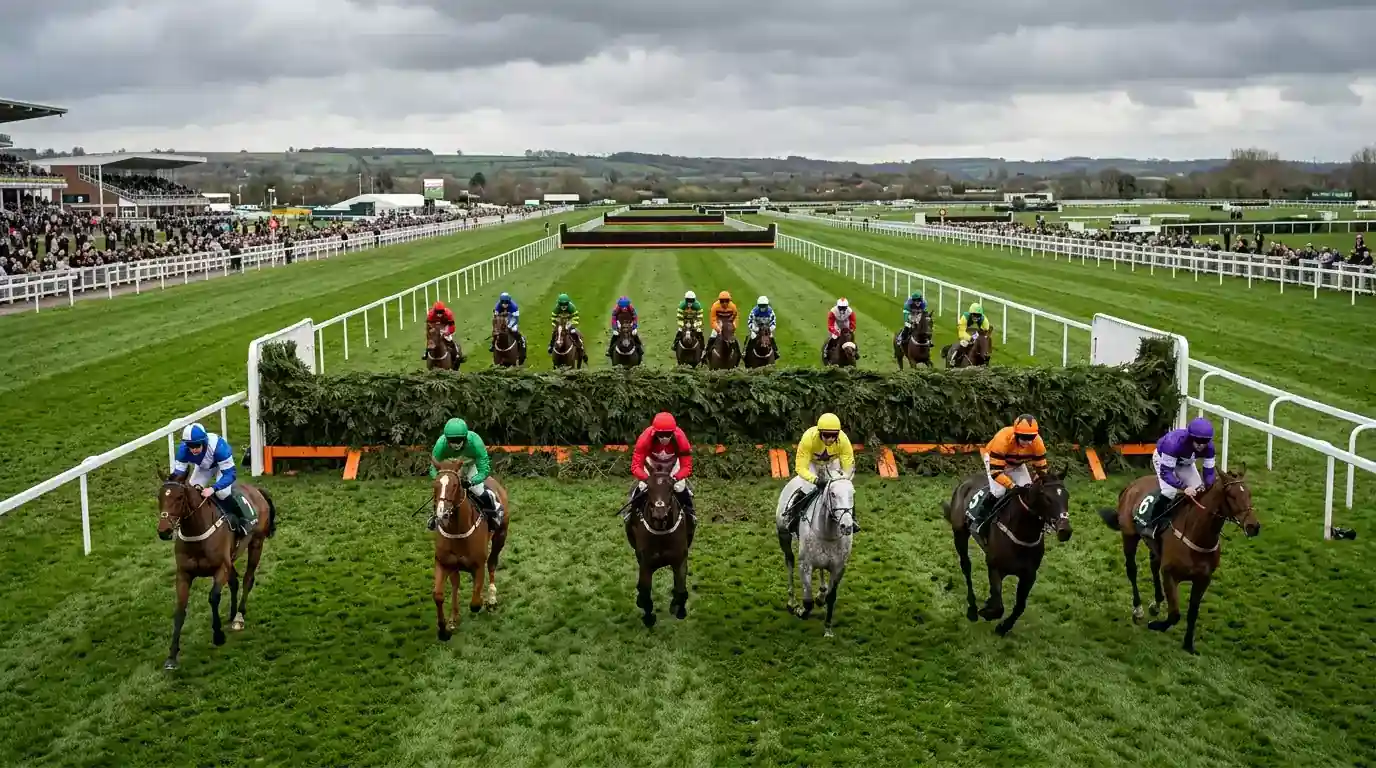
At the Grand National in 2021, the Tote Exacta paid 2,053.30 pounds while the CSF returned 882.65 pounds — the pool product paying more than double the algorithmic one. Big-field handicaps tend to produce the largest Exacta versus CSF gaps because the CSF algorithm compresses payouts as field size increases, while the Tote pool reflects the actual distribution of money wagered. When casual bettors in a 40-runner field cluster their Exacta stakes around a handful of obvious combinations, anyone holding a less popular but viable combination benefits from a dividend inflated by all that misallocated money.
The minimum Tote Exacta stake is typically one pound per combination, though this can vary by platform. On the Tote’s own site, you select your first-place horse and your second-place horse, confirm the combination, and your stake enters the pool. You can also box two or more horses for an Exacta, which covers every possible ordering of your selections — but that multiplies the cost, a topic I will address in the cost section below.
One practical note from years of Exacta betting: the value in this market concentrates in races with 10 or more runners. In small fields — five or six runners — the number of possible Exacta combinations is limited, the pools are shallower, and the dividend tends to track closely with the CSF. It is in the larger, more competitive fields where the Tote Exacta consistently outperforms.
Trifecta Mechanics: Picking the First Three Home
Adding a third horse changes everything. Not just the difficulty — the entire payout dynamic shifts. A 12-runner race has 132 possible Exacta combinations but 1,320 possible Trifecta combinations. That ten-fold increase in complexity is exactly why Trifecta dividends can be extraordinary, and why the gap between pool and fixed-odds payouts is widest in this market.
The Trifecta requires you to name the first, second, and third finishers in the correct order. In UK terminology, this is the pool equivalent of a Tricast — though the two terms refer to different products. The Tricast (properly, the Computer Straight Tricast or CST) is the fixed-odds version calculated from starting prices. The Trifecta is the Tote pool version, where the dividend is determined by the pool.
The 26% average payout advantage that Trifecta holds over Tricast across 1,011 analysed UK races is not evenly distributed. It spikes in certain conditions: big-field handicaps, competitive races where no single horse dominates the market, and meetings with deep pool liquidity. In races where a short-priced favourite wins and the placed horses are also well-fancied, the Trifecta advantage narrows because the pool money and the CST algorithm converge on similar valuations. But in the races that produce the most interesting exotic payouts — wide-open handicaps with double-figure fields — the gap regularly exceeds 40%.
I have found the Trifecta to be the single most valuable bet in the Tote’s exotic range. It sits at the sweet spot of difficulty versus reward: hard enough that casual bettors frequently back poor combinations (creating dead money in the pool), but not so impossibly difficult that you need to spend large sums on permutations to have a realistic chance. A focused Trifecta with a strong key horse on top and four or five contenders underneath gives you a manageable number of combinations at a reasonable cost, with payouts that can reach into four figures from a one-pound unit stake.
The fixed-odds Tricast, by comparison, is a product I rarely use anymore. The CST algorithm suppresses payouts in precisely the race types where exotics are most rewarding — big fields, open handicaps, competitive races. If you are going to take the risk of predicting three horses in order, you should at least be rewarded by a pricing mechanism that pays properly when the combination includes an unexpected finisher. The Tote Trifecta does that. The Computer Tricast, more often than not, does not.
Superfecta: Four in Order and Why Payouts Explode
If the Trifecta is the sweet spot, the Superfecta is the deep end. First four finishers, correct order, no margin for error. In a 14-runner race, there are 24,024 possible Superfecta combinations. The sheer number of possibilities means that when you land one, the pool is typically shared among very few winners — sometimes a single ticket holder.
The Superfecta is not available at every UK meeting. The Tote tends to offer it at fixtures with sufficient anticipated turnover, which in practice means Saturdays, festivals, and selected midweek cards with strong racing. The minimum stake is usually one pound per combination, but the cost of boxing a Superfecta escalates rapidly. Boxing just five horses covers 120 combinations at one pound each — 120 pounds for a single race. Box six and you are at 360 pounds. The maths gets prohibitive fast, which is why most serious Superfecta players use a key-horse structure rather than a full box.
I approach the Superfecta selectively. It is not a bet I place on every card, or even every Saturday. I wait for specific conditions: a big-field handicap where I have a strong view on the winner but see genuine uncertainty from second through fourth, and where the pool is deep enough that the dividend will reflect the difficulty of the bet. The ideal Superfecta race has 14 or more runners, competitive form, and multiple pace scenarios that could produce different finishing orders. In those races, even a partially correct read — getting the winner right and two of the next three — can produce a dividend that justifies the outlay on a keyed Superfecta structure.
The payouts, when they land, can be staggering. I have seen Superfecta dividends clear 10,000 pounds from a one-pound stake on a standard Saturday handicap, and at festivals the numbers go higher still. But the hit rate is low — meaningfully lower than Exacta or Trifecta — and the cost of full coverage is high. This is a bet for patients and specialists, not for casual participation. If you are new to order-dependent exotics, the Exacta and Trifecta will teach you everything you need to know about pool dynamics before you step up to the Superfecta.
Quick Cost Guide: What a Boxed or Wheeled Exacta, Trifecta or Superfecta Runs
A quick glance at the cost of boxing should cure anyone of the instinct to box everything. Here is what a one-pound unit stake looks like across the three bet types, with the number of selections increasing from four to seven.
For an Exacta box, the formula is n x (n – 1), where n is the number of horses selected. Four horses: 12 combinations, 12 pounds. Five horses: 20 combinations, 20 pounds. Six horses: 30 pounds. Seven: 42 pounds. Manageable, and the reason boxing an Exacta is the most common entry point for exotic betting.
The Trifecta box formula is n x (n – 1) x (n – 2). Four horses: 24 combinations, 24 pounds. Five horses: 60 pounds. Six: 120 pounds. Seven: 210 pounds. The costs escalate much faster because every additional horse multiplies across three positions. Going from five to six selections doubles your outlay.
The Superfecta box — n x (n – 1) x (n – 2) x (n – 3) — is where costs become prohibitive for most bankrolls. Four horses: 24 combinations, 24 pounds (the same as a four-horse Trifecta box, because with four horses in four positions there is only one arrangement per starting set). Five horses: 120 pounds. Six: 360 pounds. Seven: 840 pounds.
Wheeling — using a key horse in one position and spreading other selections across the remaining positions — cuts the cost dramatically. A one-pound Trifecta with one key horse on top and five horses in the second and third positions is 5 x 4 = 20 combinations, 20 pounds. Compare that to boxing all six horses for 120 pounds. The wheel costs one-sixth of the box but only works if your key horse finishes where you placed it. That trade-off between cost and flexibility is the core strategic decision in exotic bet construction, and it is covered in depth in our guide to exotic bet types and strategy.
My own rule of thumb: if I cannot structure the bet for under 30 pounds on a single race, I either need a stronger opinion or I am in the wrong race. The cost discipline is not about being cheap — it is about ensuring that the potential dividend justifies the outlay, which means choosing races carefully and building combinations that reflect genuine handicapping views rather than blanket coverage.
Payout Data: Tote Exotic vs Computer Straight Forecast/Tricast
Data settles arguments that opinions cannot. So let me put the numbers on the table and let them speak.
The most rigorous comparison I have seen between pool and fixed-odds exotic payouts comes from an analysis of 1,011 UK races by the racing data analysts at Geegeez. Their findings: Tote Trifecta dividends averaged approximately 26% more than Computer Straight Tricast payouts across the sample. The Trifecta paid more in four out of five races. Not four out of five at festivals, or four out of five in big handicaps — four out of five across all race types in the sample. The edge is broad, not narrow.
For the Exacta, the picture is similar but the margins are smaller. At Royal Ascot 2025, the Tote Exacta (via World Pool) beat the CSF Forecast in 23 of 35 races — a two-thirds hit rate for the pool over the algorithm. The Grand National 2021 provided the most dramatic single-race illustration: Exacta dividend 2,053.30 pounds versus CSF 882.65 pounds, and the Trifecta significantly exceeded the CST at 8,593.94 pounds.
Keith Melrose, betting editor at the Racing Post, explained the mechanism behind these gaps: “Even when the high-rollers correct a price in the win pool, the error tends to persist in the exotics.” This is the dead money effect. Sharp punters who identify mispriced horses concentrate their money in the Win pool, pushing the odds closer to true probability. But those same punters are less active in the Exacta and Trifecta pools, where the possible combinations are too numerous for any individual to cover efficiently. The result is that pricing errors — horses underrepresented or overrepresented relative to their true chances — survive in exotic pools long after they have been corrected in the Win market.
What does this mean in practice? It means the Tote Trifecta is not just an alternative to the Tricast — it is a structurally superior product for the punter. The CST algorithm uses a formula derived from starting prices, and that formula includes a margin for the bookmaker. The Tote Trifecta uses actual money wagered by actual people, many of whom are backing combinations based on sentiment rather than analysis. When you bet the Trifecta and you have done the form work, you are taking value directly from those less informed bettors. When you bet the Tricast, you are taking whatever the algorithm decides to give you after its margin is applied.
The Superfecta data is harder to aggregate because the bet is offered less frequently and pools are smaller, but the anecdotal pattern holds: pool dividends tend to exceed algorithmic equivalents, and the margin increases with the complexity of the bet. The more positions involved, the more uninformed money distorts the pool, and the greater the potential dividend for anyone with a defensible view.
When to Bet Exacta, When Trifecta, When Superfecta
Every Saturday I scan the cards and ask the same question before placing a single exotic: which bet type fits this race? The answer is never the same twice, because the three order-dependent exotics serve different situations and reward different levels of conviction.
The Exacta is the right tool when you have a strong view on the winner but limited confidence about the rest of the field. If I fancy a horse to win and can identify two or three plausible runners-up, a keyed Exacta with my selection on top and the others underneath gives me a focused bet at low cost. It is also the best option in smaller fields — eight to ten runners — where the Trifecta pool may be thin and the number of realistic third-place candidates makes ordering three positions more luck than judgement. At Royal Ascot 2025, where World Pool Exacta dividends beat the Forecast in 23 of 35 races, the conditions were ideal: deep pools, competitive fields, and international money inflating the payouts for less obvious combinations.
The Trifecta earns its place in races with 12 or more runners and a competitive finish. Handicaps are the natural habitat — the form is harder to separate, the casual money in the pool is more scattered, and the dividends reflect that chaos. I default to the Trifecta in Saturday handicaps, festival races, and any race where I can identify one or two horses I trust for the frame and three or four I rate for the minor placings. The 26% average edge over the Tricast means I am being paid a structural premium for the same level of difficulty, which makes the Trifecta the mathematically correct choice over the CST in most scenarios.
The Superfecta I reserve for the handful of races each month where the field size, form profile, and pool depth all align. A 16-runner handicap at a Saturday Ascot or Newmarket card, where I have a firm opinion on the winner and a shortlist of six or seven for the places — that is a Superfecta race. Anything smaller, anything with a dominant favourite, anything at a midweek meeting with a thin pool: I leave the Superfecta alone and focus on the Exacta or Trifecta instead.
The mistake I see most often is punters defaulting to the Trifecta on every race regardless of conditions. A five-runner novice hurdle with a 1/3 favourite is not a Trifecta race. It is barely an Exacta race. Matching the bet type to the race profile is not an afterthought — it is the first decision, and getting it wrong wastes money before you have even started selecting horses.
Exacta, Trifecta and Superfecta: Your Questions
How much does a Trifecta box with five horses cost at a one-pound unit stake?
A Trifecta box with five horses costs 60 pounds at a one-pound unit stake. The formula is n x (n-1) x (n-2), so 5 x 4 x 3 = 60 combinations. Each combination is one unit stake, giving a total outlay of 60 pounds. If you want to reduce costs, consider using a key horse structure instead of a full box.
Why does the Tote Trifecta often pay more than the Computer Tricast?
An analysis of 1,011 UK races found the Tote Trifecta pays roughly 26% more than the Computer Straight Tricast on average, with the pool dividend higher in four out of five races. The gap exists because the CST uses an algorithm with a built-in bookmaker margin, while the Tote Trifecta reflects actual money wagered. Exotic pools also contain more uninformed money than win markets, which inflates dividends for those who back less obvious but viable combinations.
Is a Superfecta bet available on the Tote for every UK race?
No. The Tote offers Superfecta pools selectively, typically at meetings with sufficient anticipated turnover. You are most likely to find Superfecta pools on Saturdays, at major festivals, and at selected premium midweek fixtures. Smaller meetings and cards with short fields may not offer Superfecta betting at all.
What is the minimum stake for an Exacta on the Tote?
The standard minimum unit stake for a Tote Exacta is one pound per combination. If you box two horses, the minimum total outlay is two pounds — one pound for each of the two possible orderings. Some promotional or introductory offers may allow smaller stakes, but the standard entry point is one pound per line.
Written by the editors at Exotic Bets Horse Racing.