Exotic Bet Strategy for UK Horse Racing: A Data-Backed Framework
 Available in US
Keith Melrose, the Racing Post’s betting editor, made an observation that has stayed with me for years: “Even when the high-rollers correct a price in the win pool, the error tends to persist in the exotics.” That single sentence is the foundation of every exotic bet strategy worth following. The win market self-corrects because sharp money flows in and pushes the price toward fair value. Exotic markets do not self-correct in the same way, because the number of possible combinations is too large for any group of bettors to cover efficiently. Errors survive. And where errors survive, value exists for anyone with a framework to find it.
I am not going to hand you a system that guarantees profits — those do not exist in betting, exotic or otherwise. What I will lay out is the strategic framework I have built over eleven years of pool betting on UK racing: how I select races, how I structure bets, how I size stakes, and how I use pool dynamics to identify situations where the numbers favour the informed bettor. If you need a primer on the different exotic bet types available in UK racing before diving into strategy, start there. This is the approach that has made exotic betting the most consistently productive part of my overall betting operation, and every element of it is grounded in data rather than instinct.
Table of Contents
- Choosing the Right Races: Field Size, Shape and Pace
- Structuring Your Exotic: Key, Box, Wheel or Spread
- Exploiting Dead Money in UK Pools
- Bankroll Sizing and Session Budgets for Exotic Bets
- Pool Size and Timing: When Liquidity Matters Most
- Applying the Framework to Multi-Race Exotics
- Exotic Bet Strategy Questions Answered
Choosing the Right Races: Field Size, Shape and Pace
Not every race deserves an exotic bet. That might sound obvious, but most punters I speak to treat every race on the card as an exotic opportunity, spreading their money thinly across six or seven Trifectas when they should be concentrating on two or three. The first strategic decision is not which horses to pick — it is which races to play at all.
Field size is the starting filter. In a six-runner conditions stakes, there are only 120 possible Trifecta combinations. The pool is shallow, the casual money is limited, and the dividend rarely compensates for the difficulty. Flip that to a 16-runner handicap and you have 3,360 Trifecta combinations. The pool is deeper, the money is more dispersed, and the proportion of uninformed stakes is higher. My floor is ten runners for a Trifecta and eight for an Exacta. Below those thresholds, I look elsewhere on the card.
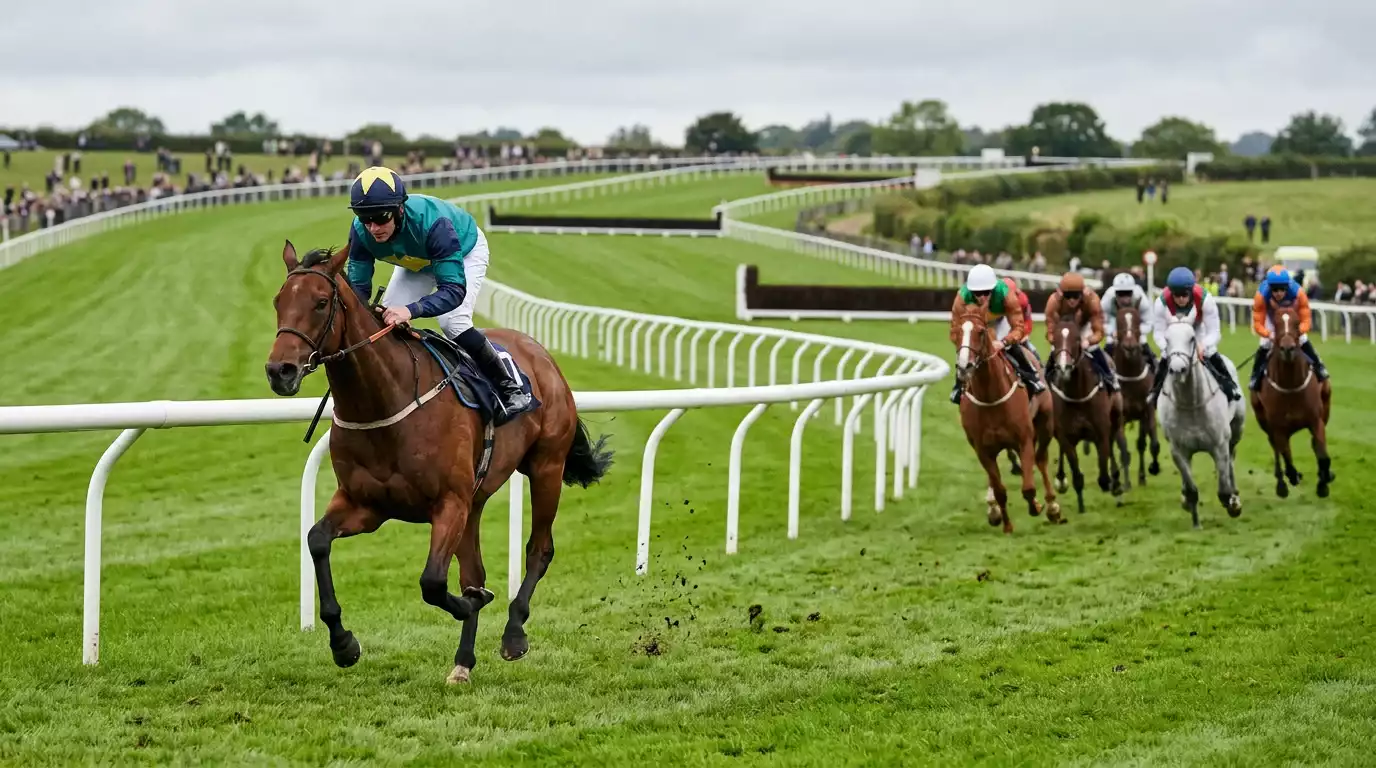
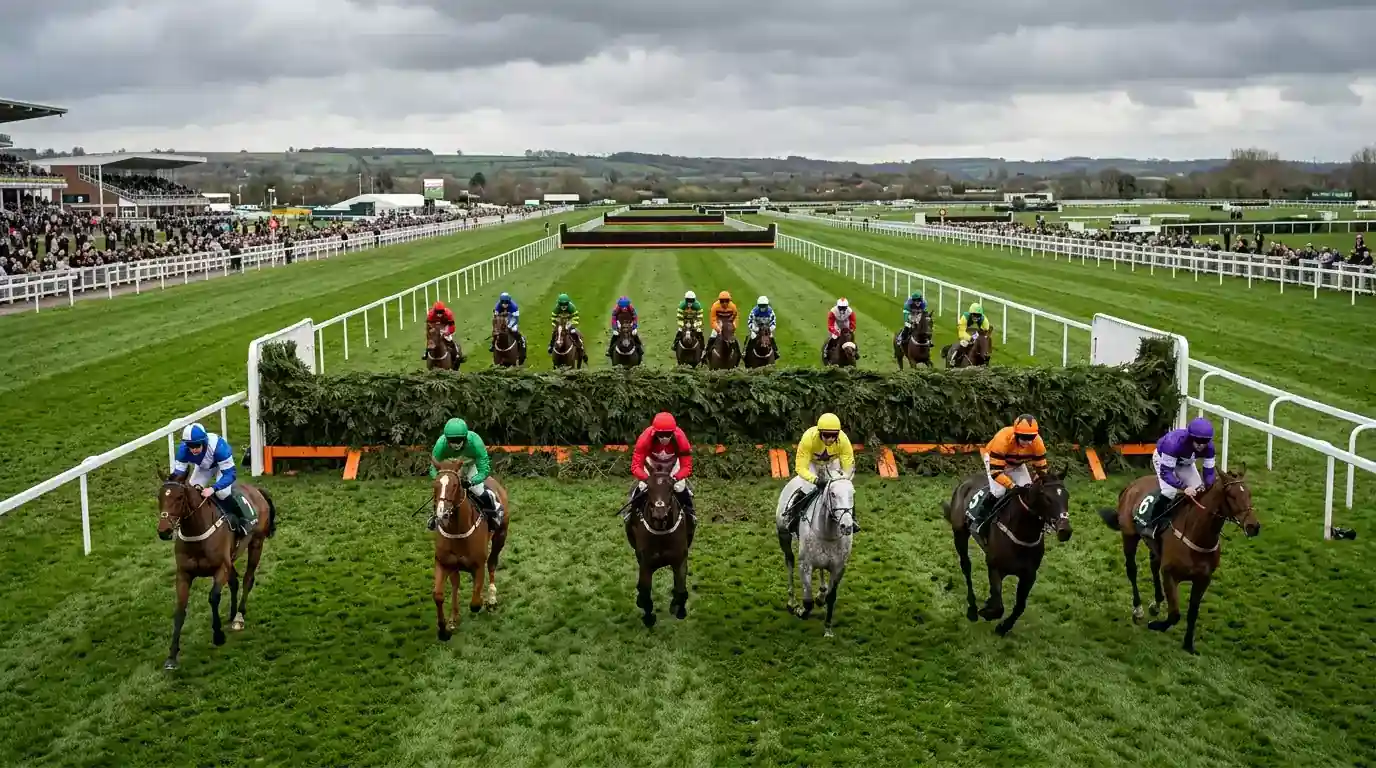
Race shape matters as much as field size. A race where a dominant front-runner is likely to lead from gate to finish produces a predictable order through the first two or three positions. That predictability compresses the exotic dividend because more people back the obvious sequence. The races I target for exotics have conflicting pace profiles: multiple potential leaders who might compromise each other, closers who benefit from a contested tempo, and enough tactical uncertainty that the finishing order genuinely could go several ways. National Hunt handicaps at Cheltenham, big-field flat handicaps at York and Newbury, heritage handicaps at the summer festivals — these are the races where race shape creates exotic opportunity.
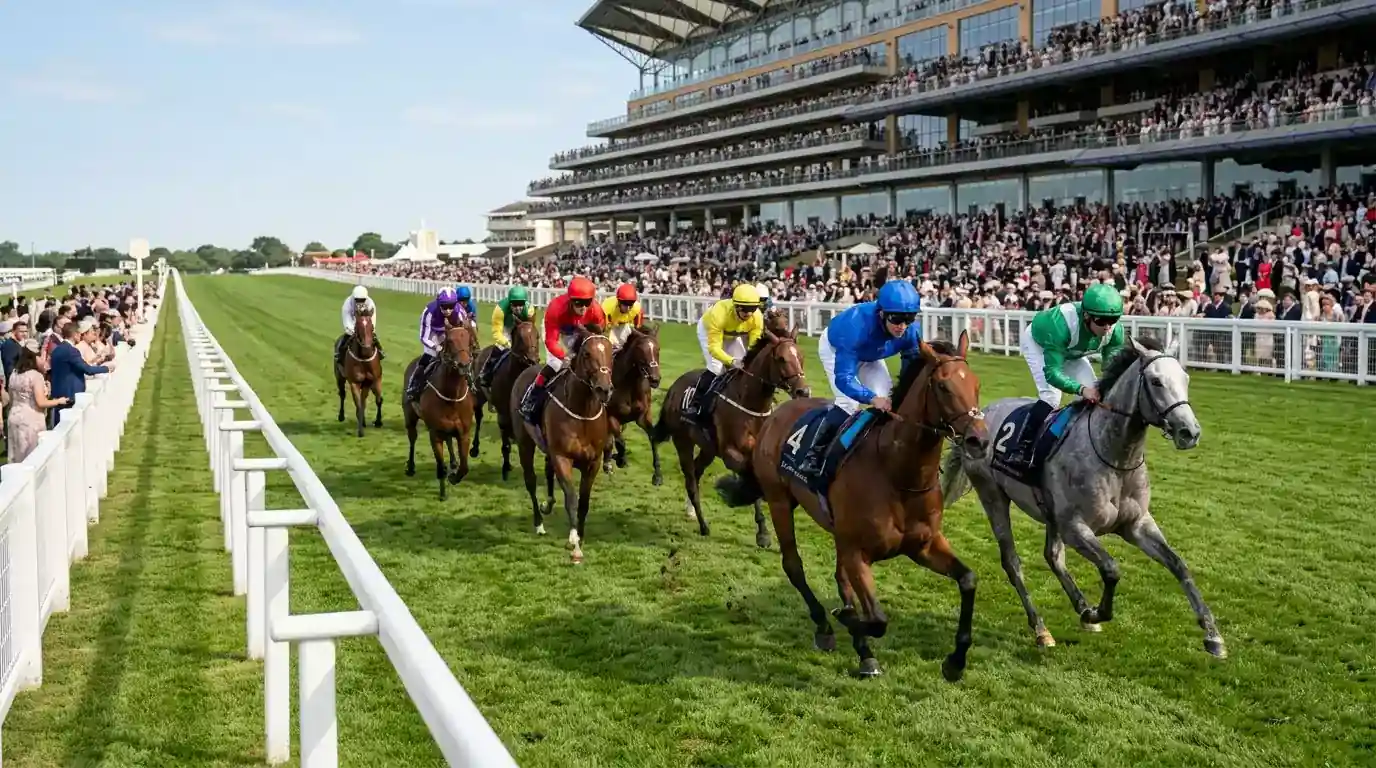
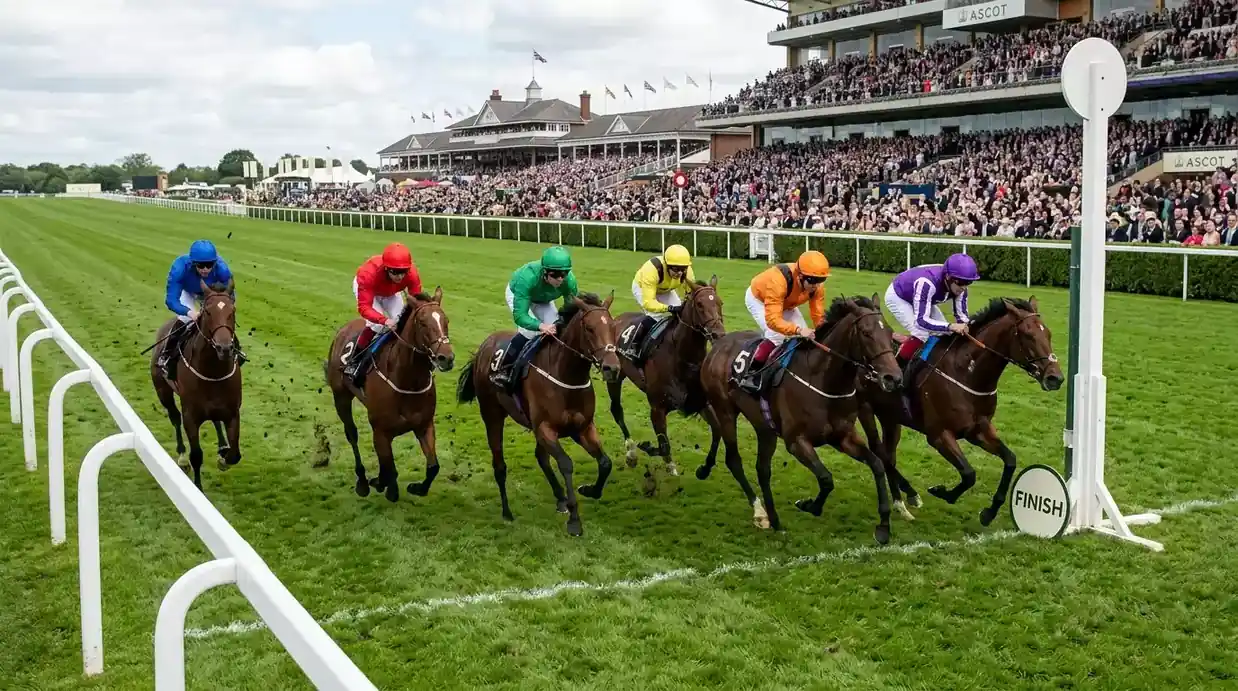
At Royal Ascot 2025, World Pool Win dividends exceeded the SP in 20 of 35 races, and the exotic dividends beat their fixed-odds equivalents even more frequently. But Royal Ascot races are almost universally competitive, with large fields and deep pools. The lesson is not “bet exotics at Royal Ascot” — it is “bet exotics in races that share Royal Ascot’s structural characteristics.” Deep pools, big fields, uncertain pace. Find those features at any meeting and you have found an exotic-friendly race.
I also pay attention to ground conditions and draw bias when selecting races. Heavy ground on a flat course amplifies the advantage of horses drawn low at certain tracks, which narrows the number of realistic contenders in the exotic frame. Similarly, a strong draw bias can eliminate wide-drawn horses from serious Exacta or Trifecta consideration, effectively reducing the real field size even if the nominal field is large. These are granular details, but they are the difference between a disciplined exotic approach and an unfocused one.
Structuring Your Exotic: Key, Box, Wheel or Spread
The way you structure an exotic bet determines your cost, your coverage, and your potential return. Get the structure wrong and even a correct race analysis ends in frustration — either because you spent too much covering combinations you did not need, or too little covering combinations you should have included.
There are four basic structures, and each serves a different level of conviction.
A straight exotic is a single combination: Horse A first, Horse B second, Horse C third. It costs one unit stake and pays the full dividend if it lands. This is the structure for maximum conviction — when you have a strong view on the exact finishing order and want the highest possible return per pound staked. I use straight Trifectas when I have a clear top pick and believe two specific horses will fill the places, usually in smaller-field races where the form points are sharply defined.
A key (or wheel) structure fixes one horse in a specific position and spreads the others. Key Horse A to win, with Horses B, C, D, and E in second and third. That gives you 4 x 3 = 12 combinations for a Trifecta. The key structure is my default for most single-race exotics. It requires genuine confidence in one horse — your key must finish where you have placed it, or the entire bet fails — but it keeps costs manageable while still providing coverage across the uncertain positions.
A box covers every possible ordering of your selected horses. Box four horses in a Trifecta and you cover all 24 orderings. Boxing is appropriate when you rate several horses roughly equally and cannot separate them by position. It is also the most expensive option per race, and the cost escalates sharply with each additional selection. I box only when I genuinely cannot identify a key horse — which, if I am honest with myself, means the race is so open that I should question whether it is an exotic-friendly race at all.
A spread assigns different horses to different positions with varying depth. Horse A or B to win, Horses C, D, and E in second, Horses D, E, and F in third. This is the most flexible and nuanced structure, but also the hardest to execute because the number of combinations is less intuitive to calculate. Spreads work well in races where you have strong views about the winner being one of two horses but see a wide-open battle for the minor placings.
The structure should follow the analysis, not the other way around. If your form study gives you a strong fancy for the win but uncertainty below, key that horse. If you have three contenders who could finish in any order, box them. If you cannot justify any particular structure, you probably do not have a strong enough view to warrant an exotic bet on that race. Move on to the next.
Exploiting Dead Money in UK Pools
In financial markets, the term “dumb money” describes capital that flows in without analysis. Pool betting has its own version: dead money. These are stakes placed by bettors who have picked their exotic combinations based on lucky numbers, favourite colours, jockey silks, or the vague sense that the favourite “must” be involved. Dead money does not go away when the race starts — it sits in the pool, inflating the dividend for anyone whose selections are based on form rather than sentiment.
Dead money concentrates in exotic pools far more heavily than in win pools. In the Win market, sharp bettors and professional syndicates place large stakes that push the odds toward fair value, squeezing out the pricing inefficiency. In a Trifecta pool with 1,320 possible combinations in a 12-runner race, no individual or syndicate can meaningfully cover the market. The mispricing persists. At Royal Ascot 2025, Quinella pools — where bettors pick the first two in any order — attracted nearly two million pounds more than the Win pools at the same meeting. That volume disparity tells you where recreational bettors concentrate their exotic money, and where the dead money pool is deepest.
How do you exploit it? By building your exotic combinations around horses that the casual market undervalues. In practice, this means including at least one horse in your Trifecta or Exacta that the public is likely to dismiss. The eight-year-old handicapper dropping in class, the horse returning from a wind operation that most casual bettors will not have noticed, the unexposed three-year-old in a field of older horses. These are the selections that create dividend value because they are underrepresented in the pool relative to their genuine chances.
The flipside: avoid building exotics that mirror the public market. If you key the favourite on top and use the second and third favourites underneath, you are backing the same combination that a large percentage of the pool has already bet. Even if it wins, the dividend will be diluted by all the other winning tickets sharing the pool. The whole point of exotic betting is to take a position that the crowd has underpriced. If your combination looks the same as everyone else’s, you have surrendered the structural advantage that makes exotic pools valuable in the first place.
Bankroll Sizing and Session Budgets for Exotic Bets
I blew through my first exotic bankroll in three weeks. Twelve races a day, Trifectas on everything, no budget, no discipline. The horses I picked were not bad — my strike rate was reasonable — but the cost of all those permutations ate through my funds faster than the occasional dividend could replenish them. That experience taught me the most important lesson in exotic betting: the edge is in the selectivity, and selectivity requires a bankroll framework.
My current approach allocates a fixed percentage of my total betting bankroll to exotics — no more than 20% in any given month. Within that allocation, I set a per-session budget based on the quality of the card. A premium Saturday with three or four strong exotic targets might get 10% of the monthly exotic budget. A midweek card with one viable race gets 3-4%. Festival days get a larger allocation because the pool depth and field sizes create the best structural conditions for exotic value.
Per-race spending matters too. I rarely spend more than 30 pounds on a single-race exotic. If the structure I want to play costs more than that, I either reduce the number of selections, switch from a box to a key, or skip the race entirely. The discipline is not optional. A Trifecta box with six horses costs 120 pounds at a one-pound stake — and if you are playing three such races on a Saturday card, you have spent 360 pounds before seeing a single result. That might be fine for a large bankroll, but for most punters it represents a disproportionate percentage of their monthly budget concentrated on a handful of outcomes with long odds.
Multi-race exotics like the Placepot need their own budget line. I treat Placepot spending as separate from single-race exotics because the risk profile is different: the cost is determined by the number of permutations across six legs, and even a modestly structured Placepot with two or three selections per leg can cost 50 to 100 pounds. I budget for one or two Placepots per week during the flat and jumps seasons, and increase that at festivals where the payout data justifies the outlay.
The overarching principle: exotic bets are high-variance by nature. You will have losing streaks. The bankroll framework exists to ensure those losing streaks do not end your operation before the winning results arrive.
Pool Size and Timing: When Liquidity Matters Most
A 50,000-pound Trifecta pool behaves differently from a 5,000-pound one, and the difference matters far more than most punters realise. In a deep pool, a single large bet barely moves the indicative dividend. In a thin pool, one punter staking 200 pounds on a specific combination can shift the entire market, suppressing the dividend for that outcome and inflating it for everything else.
World Pool turnover at Royal Ascot 2025 hit approximately 150 million pounds across the five-day meeting, with a record single-day turnover of roughly 42 million on the Wednesday card. In those conditions, exotic pools are immensely stable. The Friday Placepot at Royal Ascot 2025 produced a pool of 479,524 pounds and a dividend of 26,424.30 — numbers that reflect deep participation and genuine market pricing. Our guide to World Pool betting covers the international liquidity story in full. At a midweek Catterick meeting, the equivalent Placepot pool might be 8,000 pounds, and the dividend becomes a lottery rather than a reflection of market dynamics.
I time my exotic betting around pool depth. Saturday cards at major tracks are the backbone of my schedule: Ascot, Newbury, York, Cheltenham, Newmarket, Haydock. These meetings consistently produce exotic pools deep enough to deliver meaningful dividends. Festival weeks — Cheltenham in March, the Guineas in May, Royal Ascot in June, Glorious Goodwood in July, the Ebor meeting in August — are peak season. I increase both my frequency and my budget during these periods because the conditions are optimal.
Midweek racing has its place, but I am selective. If a Wednesday card at Kempton features a competitive 14-runner handicap, the Trifecta pool for that single race may be viable even if the overall card is quiet. I check the indicative pool size on the Tote app before committing, and if the pool is below a threshold I am comfortable with — roughly 10,000 pounds for a Trifecta, 20,000 for a Placepot — I pass. The indicative numbers update in real time, so there is no need to guess.
Applying the Framework to Multi-Race Exotics
Multi-race exotics — Placepot, Scoop6, Jackpot — require a different strategic mindset than single-race bets. You are no longer trying to nail the exact finishing order of one race; you are trying to navigate six races with a combination of accuracy and coverage that keeps your perm alive through each leg without bankrupting you on combinations.
The framework I use for the Placepot breaks each leg into one of three categories: banker legs, contention legs, and spread legs. A banker leg is a race where I have a strong view that one horse will place — I use a single selection. A contention leg has two realistic place candidates — I use two. A spread leg is an open race with no clear standout — I use three or occasionally four. The total cost is the product of selections per leg: 1 x 2 x 3 x 2 x 1 x 3 = 36 combinations at 36 pounds for a one-pound unit. That structure gives me focused coverage where I am confident and broader coverage where I am not.
The average Placepot dividend across all UK meetings is 407 pounds, which means a 36-pound outlay is expecting roughly an 11x return if you hit. At festivals, where Placepot dividends routinely run into thousands or even five figures, the expected return on the same structure is substantially higher. The perm cost looks different in hindsight when the dividend lands.
For the Scoop6 and Jackpot, I apply the same leg-by-leg analysis but with tighter budgets. These are bets where the expected hit rate is extremely low and the potential payout is extremely high — closer to a lottery than a calculated wager. I allocate a small, fixed amount per week to Scoop6 entries and treat it as a long-term speculative play rather than a core part of my exotic strategy. The goal is participation at a sustainable cost, not heavy investment in a single week’s selections.
The connecting thread across all multi-race exotics is the same principle that governs single-race betting: spend your budget where your edge is greatest. If three legs of a Placepot look highly predictable and three look wide open, load your coverage into the open races and banker the predictable ones. The perm structure should reflect your analysis, race by race, leg by leg. Anything else is just hoping.
Exotic Bet Strategy Questions Answered
How many horses should you include in a Trifecta box for UK flat races?
For most UK flat handicaps with 12 or more runners, four to five horses in a Trifecta box is the practical sweet spot. Four horses cost 24 pounds, five cost 60 pounds at a one-pound stake. Beyond five, the cost escalates rapidly and the expected dividend per unit often does not compensate. If you want to include more than five horses, switch from a box to a key structure to control costs.
What percentage of your bankroll should go to exotic bets?
No more than 20% of your total monthly betting bankroll should be allocated to exotic bets. Within that allocation, set per-session budgets based on card quality: 3-4% for a midweek card with one target race, up to 10% for a premium Saturday with multiple strong exotic opportunities. Festival weeks can warrant a temporarily higher allocation because the pool depth and field sizes create optimal exotic conditions.
Is it better to play one expensive exotic or several cheap ones?
Several focused, lower-cost exotics across carefully selected races will outperform one expensive blanket-coverage exotic over time. The variance is lower, your exposure across the card is broader, and you avoid the trap of over-spending on a single race where the result may come down to a factor you could not anticipate. Concentrate spending on races where your form analysis gives you genuine separation between contenders.
Which UK race meetings produce the best exotic payout value?
Meetings with the deepest pools and largest fields consistently produce the best exotic value. Royal Ascot, the Cheltenham Festival, the Ebor meeting at York, Glorious Goodwood, and big Saturday cards at Newbury, Newmarket, and Haydock are the standout fixtures. World Pool meetings offer the deepest liquidity of all, with Royal Ascot 2025 turnover reaching approximately 150 million pounds across five days.
Prepared by the Exotic Bets Horse Racing editorial staff.