Exotic Bet Payout Calculator: How Pool Dividends Are Worked Out
 Available in US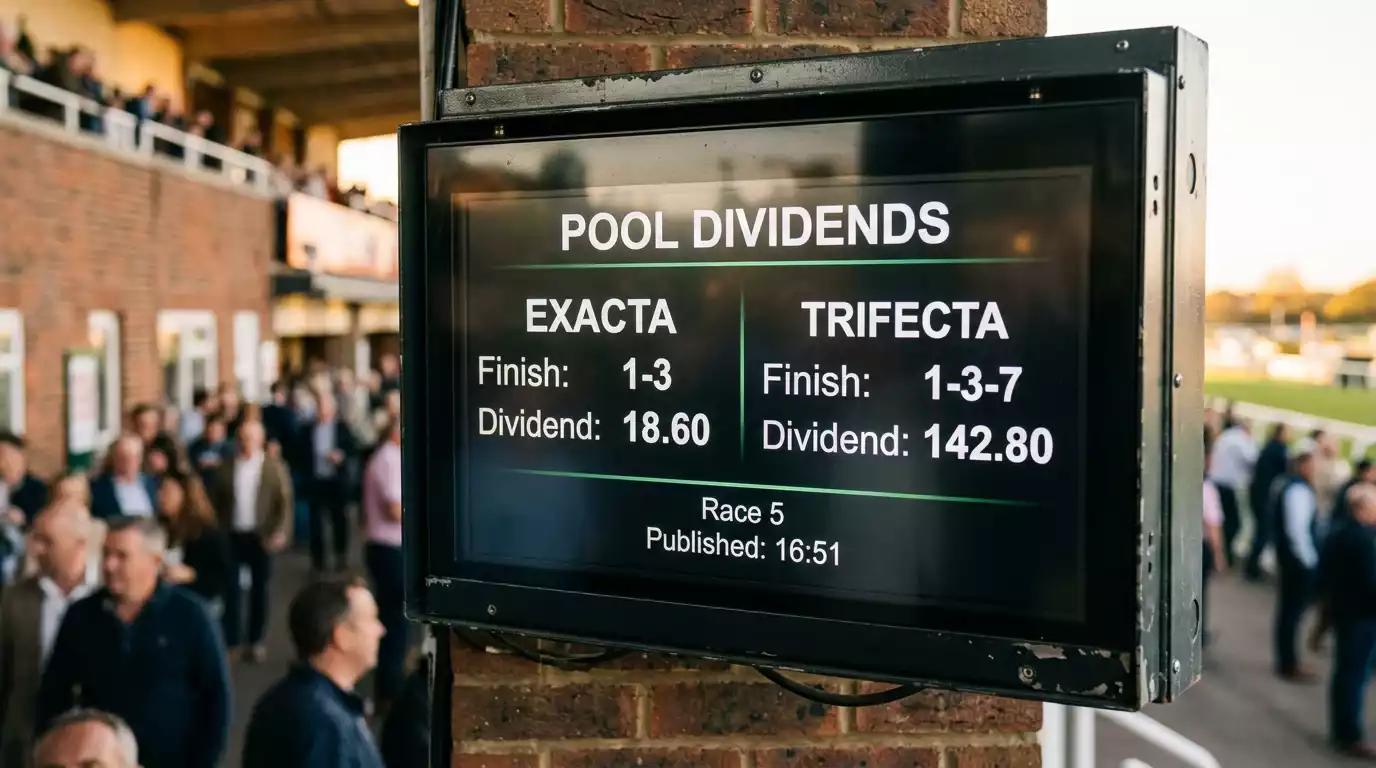
The first time I won a Tote Exacta and could not figure out why it paid what it paid, I spent an hour reverse-engineering the numbers from the published pool data. The exercise was enlightening – not because the formula is complex, but because understanding the mechanics changes how you evaluate which exotic bets are worth placing. Once you see how a pool dividend is constructed, you start spotting the conditions that inflate it and the conditions that compress it, and that knowledge quietly improves every exotic bet you place from that point forward.
The Pool Payout Formula: Gross Pool to Net Dividend
Alex Frost, the CEO of UK Tote Group, has described pool betting as a system where liquidity is everything – the more money in the pool, the more efficiently the market functions, and the better the outcomes for informed punters. The payout formula is the engine that converts that liquidity into dividends, and it runs on three numbers: gross pool, commission, and winning units.
The gross pool is the total amount staked by all participants on a particular exotic bet for a given race. Every £1 Exacta ticket, every £2 Trifecta combination, every Placepot perm – it all goes into one pool for that specific product. The Tote then deducts its commission, which ranges from 16.5% to 19% depending on the bet type. What remains after the deduction is the net pool.
The net pool is divided by the number of winning unit stakes. If the net pool is £50,000 and there are 100 winning £1 units, the dividend is £500 per £1 stake. If there are only 5 winning units, the dividend jumps to £10,000. The formula is: dividend = net pool / winning units. That is it. Three inputs, one division, and you have the published figure.
The simplicity is deceptive, because each of those three inputs is shaped by forces the individual punter cannot control. The gross pool depends on how many people bet and how much they stake. The commission rate is fixed by the Tote. The winning unit count depends on how many punters selected the correct outcome. You control your selection; you do not control the pool environment. Understanding the formula means understanding which environmental factors tilt the dividend in your favour.
Worked Example: Calculating an Exacta Dividend Step by Step
Let me walk through a concrete example. Imagine a Saturday afternoon handicap at Newbury. The Tote Exacta pool for that race closes at £32,000 gross. The Exacta commission rate is 19%. The winning combination – horse 5 first, horse 11 second – was backed by 14 winning £1 units.
Step one: calculate the net pool. £32,000 x (1 – 0.19) = £32,000 x 0.81 = £25,920. Step two: divide by winning units. £25,920 / 14 = £1,851.43. The published dividend would be approximately £1,851 to a £1 stake, though the Tote rounds to the nearest 10p in practice.
Now change one variable. Suppose the same result occurred but 42 winning units backed it instead of 14. The net pool remains £25,920, but the dividend drops to £25,920 / 42 = £617.14. Tripling the number of winning tickets cut the dividend by two-thirds. This is the core dynamic: the fewer people who predicted the correct result, the more each winner receives.
And if the pool had been larger – say a World Pool Exacta at £150,000 gross with the same 14 winning units? Net pool: £150,000 x 0.81 = £121,500. Dividend: £121,500 / 14 = £8,678.57. Same result, same number of winners, but a larger pool generating a vastly larger dividend. Pool size is the amplifier; winning ticket scarcity is the multiplier.
What Makes a Pool Dividend Rise or Fall
Three forces push dividends up. The first is pool size – larger pools generate larger net pools after commission. World Pool fixtures at Royal Ascot, where total turnover reached approximately £150 million across the 2025 meeting, produce exotic dividends that dwarf anything achievable at a standard domestic meeting. The sheer scale of international money creates dividends impossible to replicate in a thin local pool.
The second force is dead money concentration. Dead money is every losing ticket in the pool – stakes on combinations that did not win. In exotic markets, the proportion of dead money is enormous because the number of possible outcomes far exceeds the number of outcomes that attract significant backing. A Trifecta pool in a sixteen-runner handicap has 3,360 possible outcomes. The vast majority receive zero or minimal investment, but the losing stakes on the popular wrong outcomes all contribute to the net pool that winners share. More dead money equals bigger dividends.
The third force is the unpredictability of the result. When a fancied combination wins, many tickets share the net pool and the dividend is modest. When an unfancied combination wins, fewer tickets share the pool and the dividend spikes. This is why competitive handicaps and big-field races produce the best exotic dividends – the winning combination is harder to predict, so fewer punters predict it correctly.
One force pushes dividends down: commission. A 19% deduction removes nearly a fifth of every pound staked before it reaches the winners. Over time, commission is the guaranteed drain on pool betting returns. It is the price of the infrastructure. The question for each individual bet is whether the dead money redistribution and pool size effects outweigh the commission drag – and at major meetings with deep pools, the answer is usually yes.
How to Read Published Tote Dividends
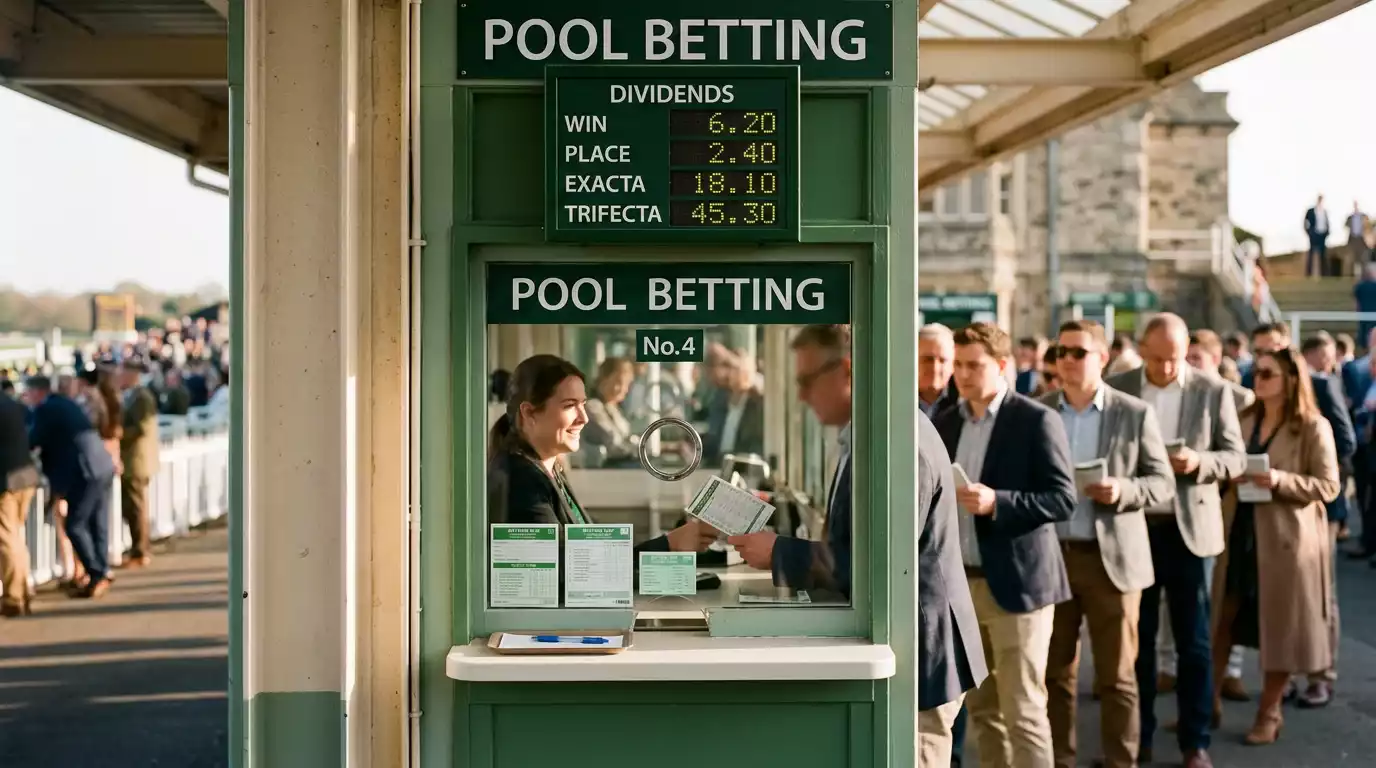
Tote dividends are published after every race on the Tote website, through racing data providers, and in the racing press. The format is standardised: “Tote Exacta: £47.30” means the dividend was £47.30 to a £1 unit stake. If you staked £2 on that combination, your return is £47.30 x 2 = £94.60. The dividend figure always includes the return of your stake – it is not profit on top of your money back.
Dividends are published per product: Win, Place, Exacta, Trifecta, Swinger, Placepot, and so on. For multi-outcome products like the Swinger, where different combinations of the top three can produce different dividends, multiple figures may be published. The Swinger might show three dividends – one for each possible pair of the first three finishers – and you collect the one that matches your specific selection.
Comparing Tote dividends to their fixed-odds equivalents is a habit worth developing. After each race, check the Exacta dividend against the CSF, and the Trifecta against the CST. Over a season, you will build an intuitive feel for which types of races and which meetings produce the largest pool premium. That pattern recognition – knowing when the pool pays more before the race, based on the type of fixture and field – is the practical application of everything in this piece.
For a broader view of how these dividends fit into the full range of exotic bets available in UK horse racing, including multi-race products where the dividend calculation compounds across legs, the pillar guide covers the entire landscape.
Why can’t you know the exact exotic payout before the race starts?
The dividend depends on three variables that are only finalised after the race: the total gross pool (which accepts stakes until the off), the number of winning unit stakes (determined by the result), and the commission deduction. Since two of these three inputs are unknown until the race concludes, the exact payout cannot be calculated in advance.
How does the number of winning tickets affect the dividend amount?
The net pool is divided equally among all winning unit stakes. Fewer winning tickets means each ticket receives a larger share. A result that only a handful of punters predicted produces a much larger dividend than a predictable result backed by many participants, even if the total pool size is identical.
Does Tote commission vary between different exotic bet types?
Yes. Tote commission ranges from 16.5% to 19% depending on the specific pool product. Win and Place pools tend to have lower commission rates, while exotic products like the Exacta, Trifecta, and multi-race pools carry rates at the higher end of the range. The exact rate for each product is published in the Tote’s terms and conditions.
Prepared by the Exotic Bets Horse Racing editorial staff.