Pari-Mutuel Betting in the UK: How Pool Odds Form and Why It Matters
 Available in US
Alex Frost, the CEO of UK Tote Group, put it plainly: there is no racing jurisdiction in the world that is not backed by a successful pool. France funds its entire racing industry through the PMU. Hong Kong’s Jockey Club generates billions annually through pari-mutuel wagering. Japan, Australia, South Africa – the pattern repeats everywhere. In the UK, we have both a pool system and a fixed-odds bookmaker market competing for the same punter’s money. Understanding how the pari-mutuel system works, and where it creates value that fixed-odds cannot, is fundamental to making informed exotic bet decisions.
How Pari-Mutuel Pools Form: Every Punter vs Every Punter
The word “pari-mutuel” comes from the French for “mutual betting,” and the name captures the system precisely. In a pari-mutuel market, you are not betting against a bookmaker. You are betting against every other punter in the pool. There is no house taking a position on the outcome – only a house taking a commission for operating the infrastructure.
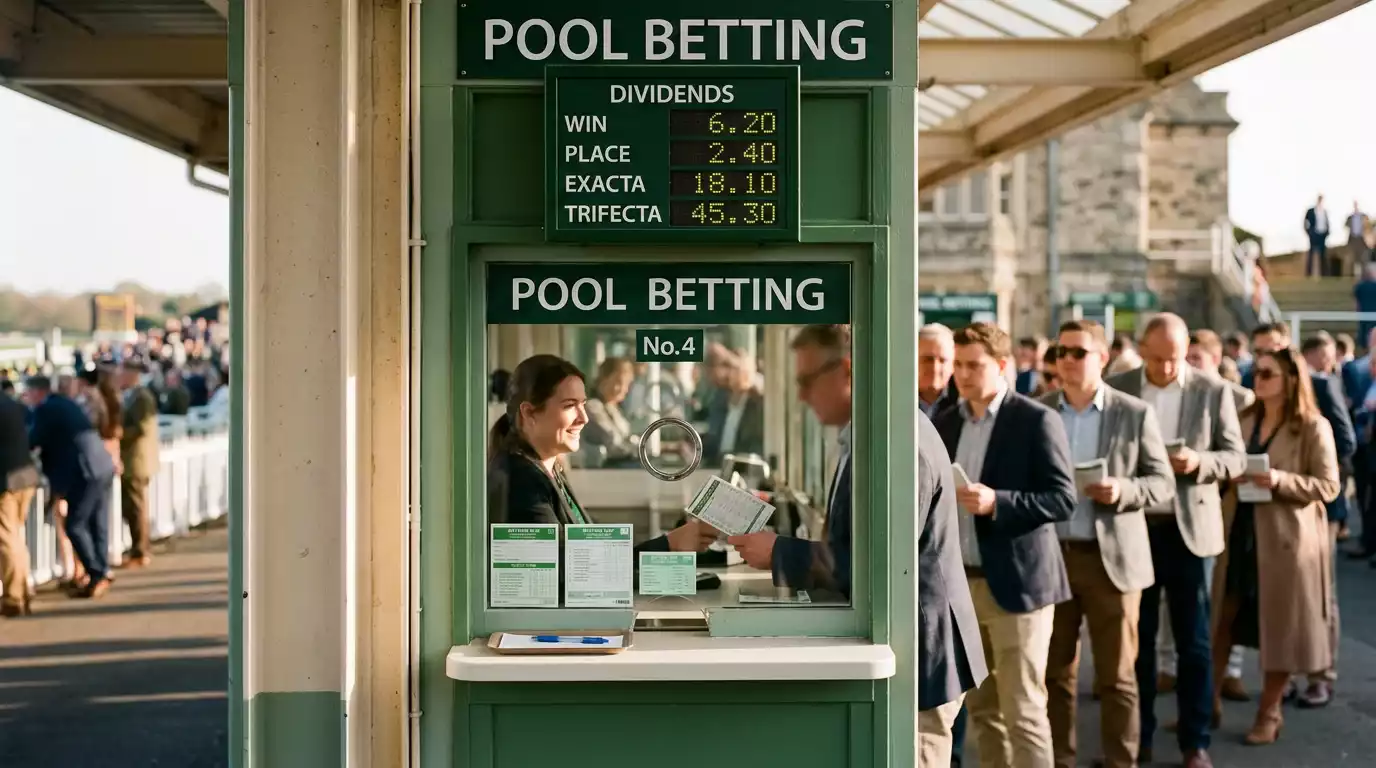
Here is how it works in practice. Every stake placed on a particular bet type for a particular race enters a single pool. The Tote – the UK’s sole licensed pool betting operator – deducts its commission, which runs between 16.5% and 19% depending on the product. The remaining net pool is the prize money, divided among all winning unit stakes. If 10,000 units are staked on an Exacta pool, commission removes roughly 1,800, and the remaining 8,200 units’ worth of money gets split among however many people correctly predicted the first two finishers.
The odds are not set in advance. They emerge organically from the pattern of betting. If most of the pool money is concentrated on one combination, the dividend for that combination will be low because many winning tickets share the net pool. If a combination attracts little backing, the dividend soars because fewer tickets share the pot. This is market-driven pricing in its purest form – the crowd sets the odds, and the operator merely facilitates.
Pool Betting Duty receipts offer a window into the scale of the UK pool market. HMRC data shows PBD receipts of £1.8 million for Q1 2025-26, down 19% on the prior year, reflecting broader pressures on UK racing turnover. The pool market is smaller than the fixed-odds market in the UK, but it plays a structurally distinct role – particularly in exotic markets where the pari-mutuel mechanic creates value that fixed odds cannot replicate.
The Totalisator in British Racing: A Brief History
I have always found it ironic that the country which invented the totalisator – the mechanical device that calculates pool dividends – has a smaller pool betting culture than countries that adopted the technology later. The first totalisator machine was used in the UK in 1929, and for decades the Tote (formally the Horserace Totalisator Board) operated as a statutory body alongside the fixed-odds bookmaking industry.
The Tote was privatised in 2011, purchased by Betfred, and subsequently acquired by a consortium that rebranded it as UK Tote Group. Under the new ownership, Tote revenue has grown by 56% between 2019 and 2026, driven by digital platform improvements, World Pool partnerships with the Hong Kong Jockey Club, and product innovation. The trajectory is upward, even as overall UK racing turnover has declined.
The historical coexistence of pool and fixed-odds betting is a British peculiarity. In most major racing nations, pool betting dominates or operates as a monopoly. In the UK, punters have a genuine choice between the two systems for every race, and that choice creates a competitive dynamic that benefits the informed bettor. You can compare Tote dividends against bookmaker prices on every single race, and over time, the data reveals clear patterns about when each system offers better value.
Pool Model vs Bookmaker Model: Structural Differences
The differences are not cosmetic – they are structural, and they affect your expected return in measurable ways. A bookmaker sets prices that include a margin (overround). The overround guarantees the bookmaker a profit regardless of the result, provided the book is balanced. A typical six-runner race might carry an overround of 115-120%, meaning the theoretical return to the bettor is 83-87p for every £1 staked. The bookmaker absorbs the risk and pockets the margin.
In a pari-mutuel pool, the operator takes a flat commission – say 18% – and distributes the rest to winners. There is no overround in the traditional sense, and the Tote carries no risk on the outcome. The commission is the operator’s revenue; everything else goes back to bettors. Whether the dividend is generous or miserly depends entirely on the distribution of stakes within the pool.
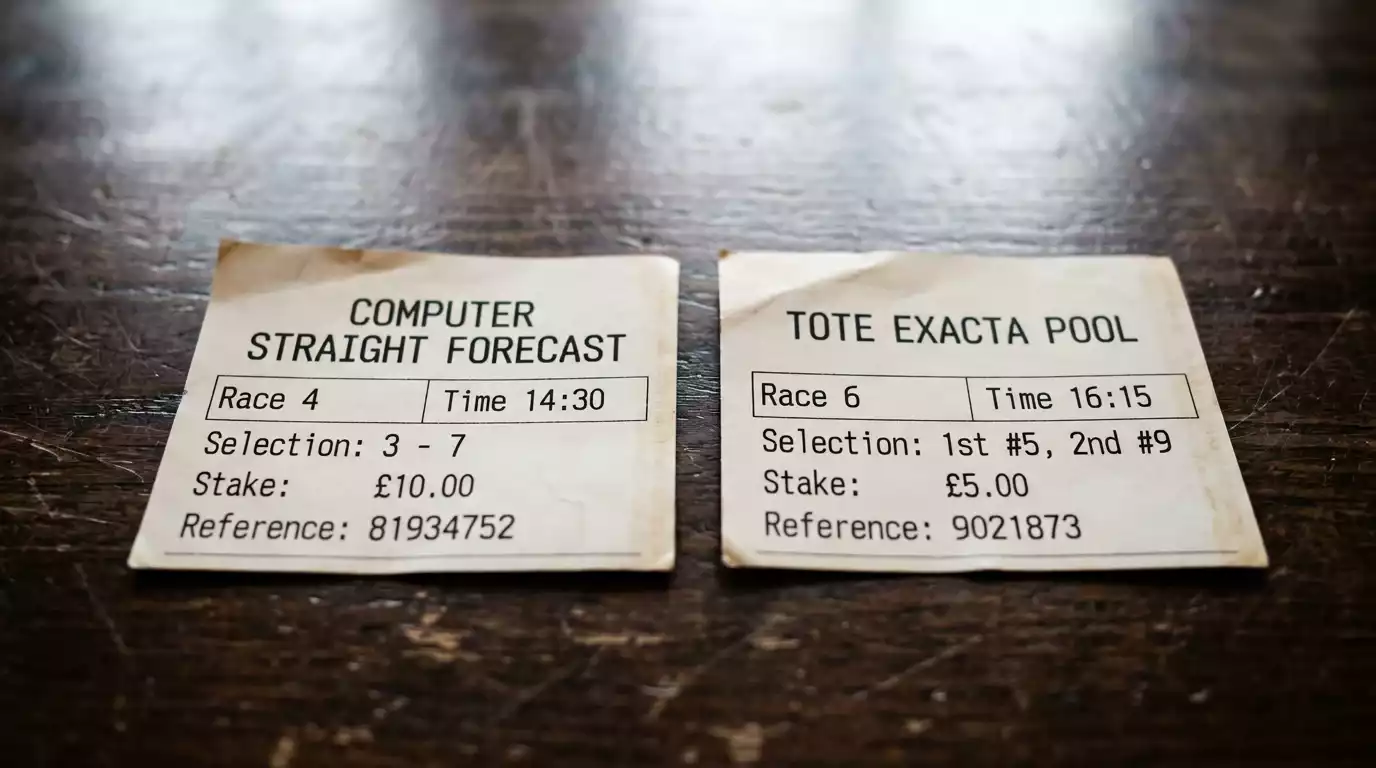
This structural difference matters most in exotic markets. A bookmaker’s overround on a Trifecta equivalent (the Computer Straight Tricast) is embedded in a formula that uses SPs, each of which already contains its own margin. The compounding of margins across three finishing positions can erode value significantly. In the Tote Trifecta pool, commission is taken once from the gross pool, and the dead money from losing tickets is redistributed entirely to winners. There is no compounding margin – just one flat deduction.
Tote revenue growth of 56% since 2019 suggests the pool model is gaining traction, even in a market historically dominated by bookmakers. The World Pool partnership has brought international liquidity to UK pools, increasing both pool depth and the dead money effect that drives exotic dividends higher.
Why the Pari-Mutuel System Creates Value in Exotic Markets
The value proposition of pool betting over fixed odds strengthens as the number of possible outcomes increases. In a Win market, there are n possible outcomes (one per runner). In an Exacta, there are n x (n – 1) outcomes. In a Trifecta, n x (n – 1) x (n – 2). As the outcome space expands, the proportion of the pool sitting on losing combinations – dead money – grows dramatically.
In the World Pool at Royal Ascot 2025, Quinella pools attracted nearly £2 million more than Win pools. That concentration of money in exotic markets is not accidental – it reflects the international betting community’s understanding that exotic pools, with their massive dead money concentrations, offer structural value that win markets cannot match. The sheer number of losing tickets in an Exacta or Trifecta pool means the net pool redistributed to winners carries the dead weight of everyone who got the result wrong.
A bookmaker, by contrast, prices each exotic outcome through a formula that anchors to starting prices. The formula does not care how many people backed losing combinations – it calculates the payout mechanically. There is no dead money redistribution, no pool inflation effect. The payout is what the formula says it is, and the formula embeds the bookmaker’s margin at every step.
This is why the Tote Trifecta pays an average of 26% more than the Computer Straight Tricast across large samples of UK races. The pool mechanic captures value that the fixed-odds formula structurally cannot. For exotic bettors, the pari-mutuel system is not just an alternative to bookmaker betting – it is a fundamentally different value engine, and understanding its mechanics is the first step to exploiting it. The complete guide to exotic bets in UK horse racing applies this understanding across every product available to UK punters.
Is pari-mutuel the same as Tote betting in the UK?
In the UK, yes. The Tote is the sole licensed pari-mutuel operator for horse racing. All Tote pool products – Win, Place, Exacta, Trifecta, Placepot and others – operate on the pari-mutuel principle where stakes are pooled, commission is deducted, and the net pool is divided among winners.
Why are pool odds not fixed at the time you place the bet?
Pool odds are determined by the final distribution of stakes across all outcomes. Since other punters continue to bet into the pool until the race starts, the proportions change right up until the off. The dividend you receive reflects the entire pool’s composition at closing, not the state of the pool at the moment you placed your bet.
How does the pari-mutuel system prevent the operator from losing money?
The operator deducts a fixed commission from the total pool before distributing winnings. This commission – between 16.5% and 19% for UK Tote products – is guaranteed revenue regardless of the race outcome. The operator takes no position on any result and bears no risk from long-priced winners or unexpected outcomes.
Created by the ”Exotic Bets Horse Racing” editorial team.