Exotic Bets vs Straight Bets: When Extra Complexity Pays Off
 Available in US
For seven years, I was a straight-bet punter. Win bets, each-way bets, the occasional accumulator on a Saturday. My results were consistent – modestly profitable in good months, modestly unprofitable in bad ones, and never transformative. The day I started allocating a portion of my bankroll to exotic bets, the shape of my returns changed. Not the average – the shape. The valleys got a bit deeper, but the peaks reached heights that straight bets could never touch. Whether that trade-off suits you depends on your temperament, your bankroll, and how you define “better value.”
Risk and Reward Profile: What the Numbers Look Like
Straight win bets on UK horse racing hit at roughly 25-35% for a competent form analyst backing selections at average odds of 3/1 to 5/1. The returns are frequent enough to sustain a bankroll, and the variance is manageable – losing runs of 10-15 bets are common but rarely catastrophic. The emotional rhythm is steady: small wins, small losses, occasional bigger wins.
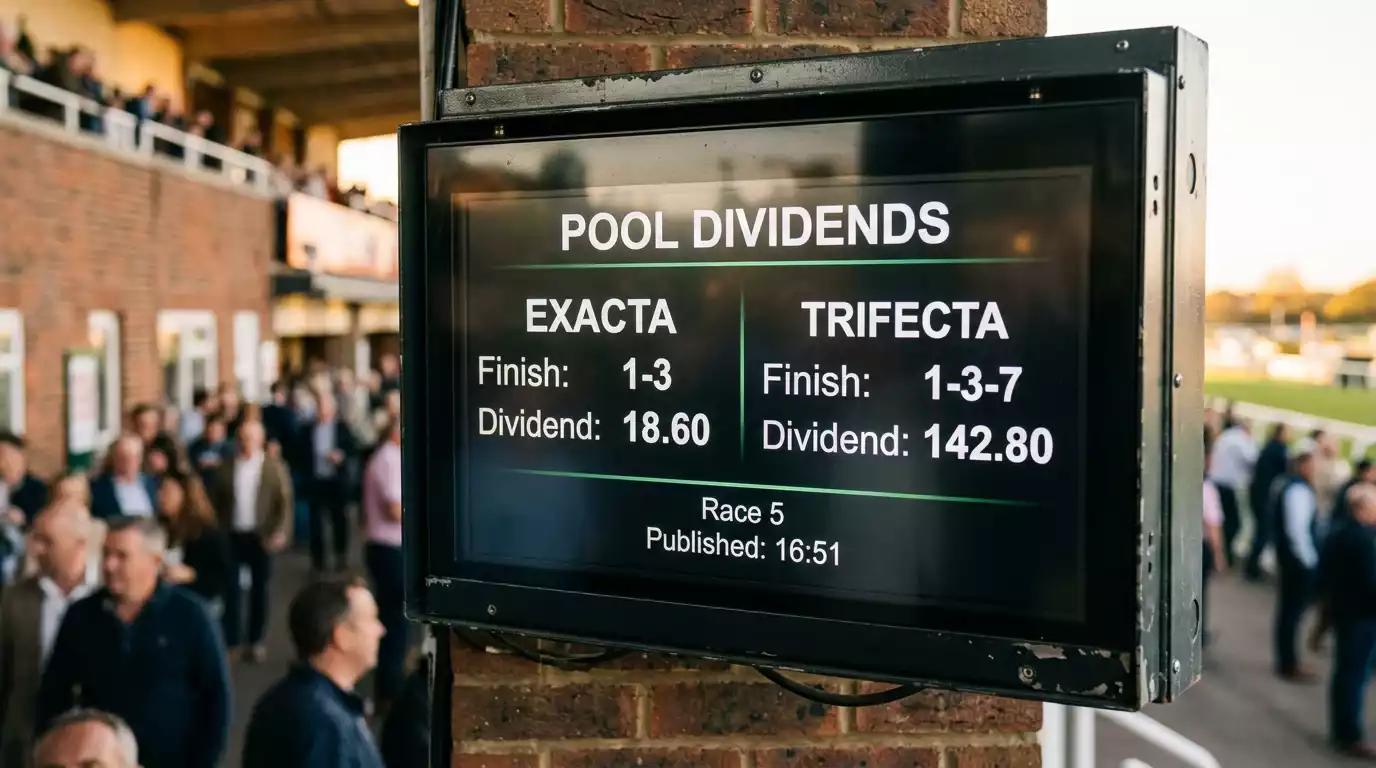
Exotic bets operate on a fundamentally different distribution. A Tote Trifecta might hit once in 15-20 attempts if you are selecting well, but the payouts when it lands can be ten to fifty times your stake – or more in the right conditions. An analysis of 1,011 UK races showed the Tote Trifecta paying an average of 26% more than the Computer Tricast, and at Royal Ascot 2025, World Pool Trifecta dividends exceeded the Tricast in 24 of 35 races. The upside is genuine and measurable.
The Placepot compresses the variance slightly – the average dividend is around £407, and a well-structured perm lands perhaps 3-5 times per season of Saturday betting. But the losing runs between collections can stretch to 8-10 weeks. During those dry spells, your exotic allocation is generating no return at all. The emotional rhythm is different: long stretches of nothing punctuated by sharp spikes.
The risk profile of exotics is therefore higher-variance and higher-upside than straight bets. The expected return per pound staked may be similar – or even superior in well-targeted exotic markets – but the path to that return is bumpier. You need a bankroll that can absorb the dry spells and a temperament that does not panic during losing runs.
Expected Value: Where Exotics Have a Structural Edge
The structural edge in exotic pool betting comes from dead money redistribution – the mechanism by which losing stakes are funnelled to winning tickets. In a Win market, dead money comes from backers of losing horses. In a Trifecta market, dead money comes from every combination of first, second, and third that did not match the result. The proportion of dead money in a Trifecta pool typically exceeds 99%, because the number of possible outcomes is so large that almost all combinations attract losing stakes.
Keith Melrose of the Racing Post captured the practical implication: even when sharp money corrects a price in the Win pool, the error tends to persist in the exotics. The Win market has professional correctors – sharp bettors and bookmaker traders who move prices towards efficiency. The exotic markets, with their vastly larger outcome spaces, are too complex for systematic professional correction. Pricing errors survive until the race is run, and the money sitting on those errors becomes dead money that inflates the dividend for the few who got the result right.
This structural advantage is real, but it comes with a caveat: you must be on the correct combination to benefit. Dead money redistribution helps you only when you win. When you lose – which is most of the time with exotics – the dead money mechanic is irrelevant. The edge is in the payout on winning bets, not in the frequency of winning.
When Straight Bets Are the Smarter Choice
Exotic bets are not universally superior. Several scenarios favour straight bets clearly.
Small fields with strong favourites produce modest exotic dividends. A five-runner race where the 4/7 favourite wins and the 3/1 second favourite finishes second will generate an Exacta dividend that barely exceeds the Win price. The exotic complexity adds cost without adding meaningful return. A straight win bet on the favourite, or an each-way bet on the value horse in the race, is more efficient.
Thin pools at minor meetings compress exotic dividends further. When the Tote Exacta pool holds £2,000, the net pool after commission is around £1,600, and even a sole winning ticket produces a modest return. The same form analysis that identified the Exacta selection would have generated a profitable win bet through a bookmaker at fixed odds, without the pool size constraint.
And sometimes the form picture simply points to a winner without pointing to the places. If I have high conviction that a particular horse wins a race but no meaningful view about which horses finish second and third, a straight win bet captures my edge cleanly. Adding an Exacta or Trifecta in this scenario means spending extra money on positions where I have no informational advantage, which dilutes my return on investment.
A Hybrid Approach: Combining Straight and Exotic in One Session
The approach that has served me best over the past four years is a deliberate hybrid. I assess each race on the card independently, asking two questions: do I have a view on the winner, and do I have a view on the finishing order?
When I have a strong view on the winner but not the places, I place a straight win bet. When I have a view on the finishing order – especially in competitive handicaps with large fields where dead money concentrations are high – I place an exotic bet instead of or alongside the win bet. When I have both views, I might do both: a win bet on my top selection and a keyed Exacta or Trifecta with that horse in the top position.
The Placepot sits apart from this race-by-race framework. I play it every Saturday as a separate allocation within my exotic budget – it covers the entire card and provides engagement across six races regardless of whether individual races suit straight or exotic treatment. The average Placepot dividend of £407 against a typical perm cost of £10-£20 provides a risk-reward ratio that justifies the weekly commitment even during losing runs.
The hybrid approach works because it allocates each pound to its highest-value use. Straight bets go where conviction about the winner is strong and exotic complexity adds no value. Exotic bets go where the pool dynamics – big fields, deep pools, dead money – create structural value that straight bets cannot capture. The two approaches complement each other rather than competing, and together they produce a return profile that is smoother than pure exotics and higher-ceiling than pure straight bets.
For the complete framework connecting straight and exotic approaches across every bet type available in UK racing, the data-driven guide to exotic bets covers the full landscape.
Do exotic bets have a higher expected value than straight win bets?
In well-targeted markets – large-field races at meetings with deep pools – exotic bets can offer a structural expected value advantage due to dead money redistribution. The Tote Trifecta pays an average of 26% more than the Computer Tricast across a large sample of UK races. However, exotics also have much lower hit rates, so the advantage only materialises over a sufficient number of bets.
How does the hit rate of exotic bets compare to win and place bets?
Win bets for a competent analyst hit at roughly 25-35%. Exacta bets hit less frequently, Trifecta bets considerably less, and multi-race products like the Placepot land perhaps 3-5 times per season of regular Saturday play. The lower hit rate is offset by substantially larger payouts when the bet does land.
Can you profitably mix exotic and straight bets on the same racecard?
Yes, and this is the approach many experienced punters use. Straight bets target races where conviction about the winner is high and exotic complexity adds no value. Exotic bets target races where field size, pool depth, and competitive form create structural value from dead money redistribution. The two approaches complement each other within a single session budget.
Prepared by the Exotic Bets Horse Racing editorial staff.