Tote Jackpot: How the Six-Race Pool Rolls Over and What It Pays
 Available in US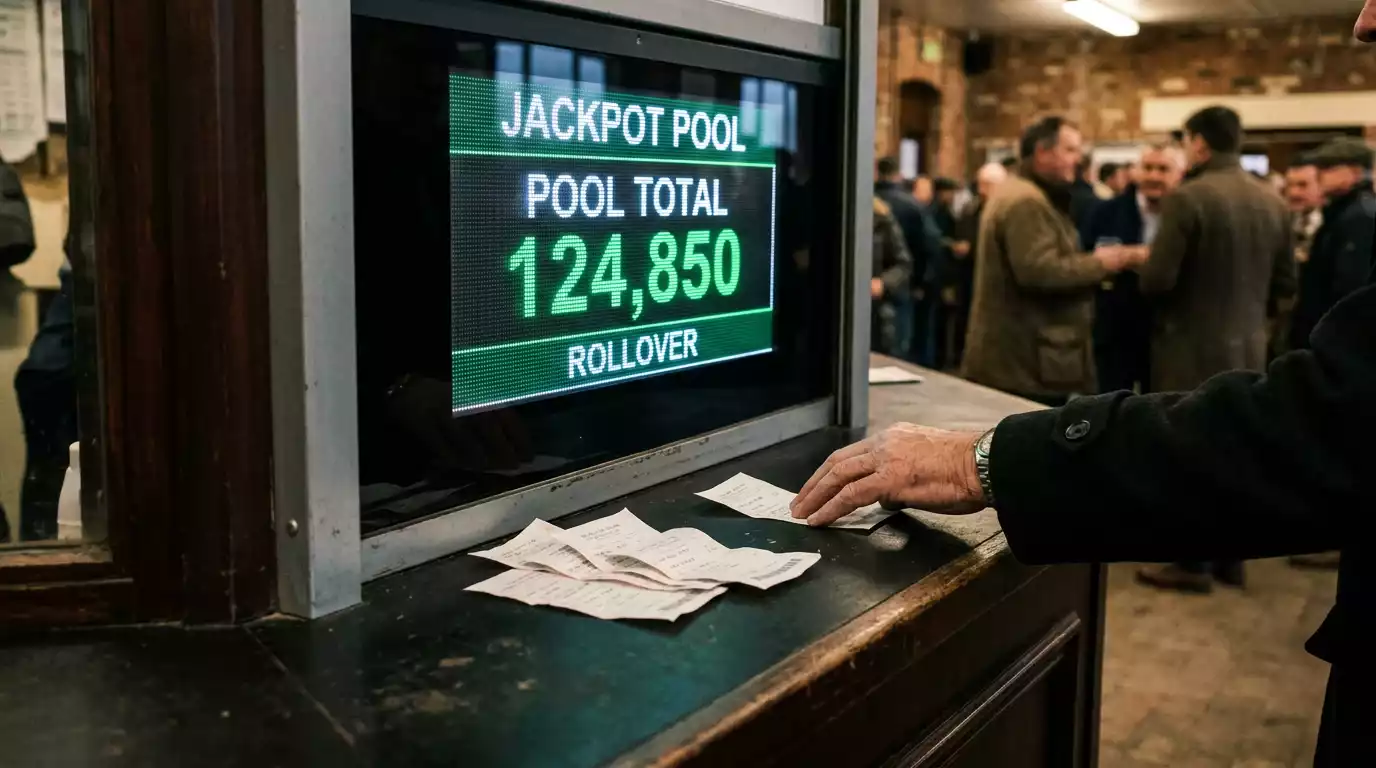
Steve Whiteley walked into Exeter racecourse in March 2011, placed a £2 Tote Jackpot bet, and walked out with £1,507,935.71. That remains the largest single pool betting payout in British racing history – a figure that makes lottery wins look pedestrian when you consider the stake involved. The Tote Jackpot is the product that made it possible, and understanding how its rollover mechanics work explains why payouts of this magnitude can occur at all.
The Jackpot asks you to pick the winner of six nominated races. All six must win. No place consolation in the main fund, no partial credit for getting five right. It is a binary bet with a pool that grows every time nobody gets all six correct. That growth is the engine behind the headline figures.
How the Tote Jackpot Works: Win All Six to Claim the Pool
I remember the first time I studied the Jackpot rules properly, expecting complexity, and finding instead a product of almost brutal simplicity. Six races are nominated by the Tote, typically on a midweek or Saturday card. You select one or more horses in each race. If your selections include the winner in all six races, you share the Jackpot pool with any other punters who achieved the same feat.
Stakes enter a single pool. The Tote takes its commission – in line with standard pool deductions – and the net pool is the prize. If one person has the winning combination, they take the lot. If several share it, the net pool is divided equally per winning unit stake. If nobody picks all six winners, the Jackpot rolls over.
The simplicity is deceptive. Six winners in sequence is a formidable challenge. Even in races with short-priced favourites, the occasional upset in one leg is enough to void most entries. The difficulty is what makes the rollover mechanic meaningful – the Jackpot is designed to be hard to win, which allows the pool to accumulate to levels that justify the effort and expense of playing.
Unlike the Placepot, which requires placed finishes and pays out most days, the Jackpot can go unwon for weeks. Each unwon day adds the entire day’s stakes (minus commission) to the rolled-over balance, and the growing pot attracts more participants the following time, further inflating the pool. The Jackpot’s size on any given day is the sum of all previous unwon pools plus the current day’s contributions.
Rollover Mechanics: When Pools Grow and Why They Attract Late Money
There is a tipping point in every Jackpot sequence where the rolled-over balance becomes large enough to change betting behaviour. I have seen it happen around the £50,000 mark – that is roughly where media coverage picks up, casual punters start taking notice, and the pool’s growth accelerates as new money floods in from people who would not normally play.
This influx of late money is a double-edged sword. It grows the pool further, which is good for the eventual winner. But it also increases the probability that the Jackpot is won that day, because more combinations are covered. The paradox of the big rollover is that the pool is largest on the day it is most likely to be claimed, which means the dividend per winning unit can sometimes disappoint relative to the headline pool size, especially if the results are straightforward and many entries share the win.
The most valuable Jackpot days, from a punter’s perspective, are mid-sequence – the pool has accumulated to a meaningful size but has not yet attracted the wave of casual money that comes with mainstream attention. At this point, the pool is generous relative to the number of entries, and the probability of a sole-winner scenario is higher. Getting in early in a rollover sequence, when others are still waiting for the pot to grow, is a small tactical edge.
Commission on the Jackpot pool follows standard Tote rates, which sit between 16.5% and 19%. The deduction is applied to the total pool each day, including the rollover amount. This means a pool that has rolled over multiple times has had commission deducted at each stage, slightly eroding the gross total. The net pool – what winners actually receive – is always less than the advertised gross figure.
Record Jackpot Payouts: From £2 to £1.5 Million
Whiteley’s Exeter windfall in 2011 remains the benchmark. His £2 Jackpot ticket found six winners across a card that included several outsiders, and the pool had rolled over sufficiently to reach a massive total. The £1.5 million payout captured national media attention and remains the single most-cited figure in UK pool betting. It demonstrated what the Jackpot can deliver in its most extreme form – a small stake, a rolled-over pool, and a result sequence that nobody else predicted.
Other notable Jackpot payouts have reached six figures without approaching Whiteley’s record. The pattern in each case is consistent: a multi-day rollover, competitive racing with enough upsets to thin the winning ticket count, and a final day where the result sequence proved too difficult for most entries to solve. The races that produce record Jackpot payouts are not the ones with obvious winners in every leg – they are the ones where two or three legs produced unexpected results that eliminated the bulk of entries.
The Jackpot’s capacity for life-changing payouts is not theoretical. It has delivered. But the frequency is low, and the expected return on any single Jackpot entry is negative – as with any pool bet, the commission ensures the house always takes its share. The Jackpot is a high-variance, low-frequency product. You play it for the upside, not the grind.
Jackpot vs Scoop6: How the Two Saturday Exotics Differ
Both the Jackpot and the Scoop6 require six winners. Both are pool-based. Both can roll over. From a distance, they look like the same product with different branding. They are not.
The Scoop6 has a three-fund structure – Win Fund, Place Fund, and Bonus Fund – that the Jackpot does not replicate. The Scoop6’s Place Fund offers a consolation payout for all-six-placed entries, giving punters a partial return even when they miss the winners. The Jackpot has a consolation mechanism too, but it is simpler: if the Jackpot is not won, a consolation dividend is typically paid to those who found the most winners (usually five out of six). This consolation payout is much smaller than the main fund but prevents a total loss on a near-miss.
The Scoop6’s Bonus Fund – requiring a seventh correct selection the following week – has no Jackpot equivalent. The Jackpot is a single-session bet: you play, the six races run, and either you win or you do not. There is no deferred element, no nomination the following week. For punters who prefer a cleaner, one-day structure, the Jackpot is the simpler choice. For those drawn to the escalating drama of a Bonus Fund accumulation, the Scoop6 offers more narrative.
In terms of pool size, the Scoop6 tends to attract larger pools because it runs on Saturdays with premium racing and benefits from higher visibility. The Jackpot can run on any day the Tote nominates, including midweek, where pools are typically smaller. However, midweek Jackpots that roll over can catch fire and grow rapidly once they hit the publicity threshold, and the smaller starting pool means fewer entries competing for the rollover balance.
My own preference depends on the week. If the Saturday card has multiple bankable races and a large Scoop6 Bonus, I lean towards the Scoop6 for its richer reward structure. If the Jackpot has been rolling over midweek and the nominated card includes races I have strong views on, the Jackpot’s simplicity and potentially thinner field of entries makes it the better play. The key distinction is structure: the broader exotic betting landscape offers both products, and choosing between them is a matter of matching the product to the racing on offer.
What happens to the Tote Jackpot pool if nobody picks all six winners?
The entire net pool rolls over to the next nominated Jackpot meeting. It accumulates with each unwon day, growing until a punter or group of punters selects all six winners. A consolation dividend is typically paid to those who found the most winners, usually five out of six.
How does the consolation dividend work when the Jackpot is not won?
When no entry finds all six winners, a consolation payout is distributed to those who selected the highest number of winners – typically five. The consolation amount is a fraction of the day’s new contributions and is considerably smaller than the main Jackpot fund, which rolls over in full.
Can you place a Tote Jackpot bet on non-Saturday meetings?
Yes. The Tote nominates Jackpot meetings across the week, including midweek fixtures. Pool sizes on midweek meetings are generally smaller than Saturday cards, but rollovers can build the pool significantly over time regardless of the day.
Prepared by the Exotic Bets Horse Racing editorial staff.