Keying Horses in Exotic Bets: How Banker Selections Reduce Costs
 Available in US
Keith Melrose of the Racing Post made an observation that has shaped my exotic betting for years: even when sharp money corrects a price in the Win pool, the error tends to persist in the exotics. That persistence is where keying – fixing a strong selection in one position and letting the uncertainty play out around it – becomes the most efficient tool in the exotic bettor’s kit. You do not need to predict every position. You need to get one position right with high confidence and structure the rest of the bet to capture the value in the positions you are less sure about.
Keying in an Exacta: Top Slot vs Bottom Slot
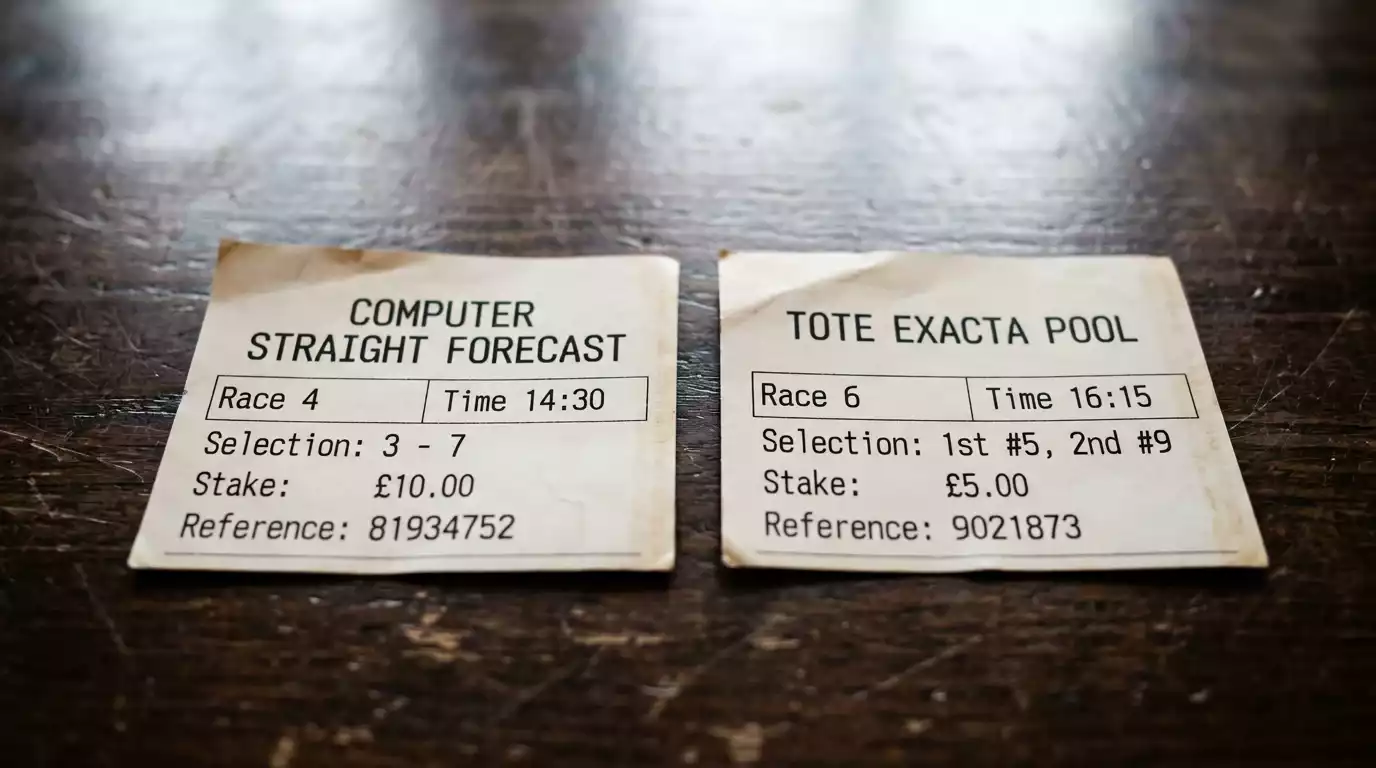
An Exacta key places one horse in a fixed position – either first or second – and rotates other selections through the opposite slot. The distinction between keying on top (to win) and keying on the bottom (to finish second) is tactical, not mechanical. The cost is the same either way: the number of horses in the non-keyed position equals the number of combinations.
I key a horse on top when my conviction is about winning rather than placing. A horse with a dominant front-running style that has led throughout its last three starts is a natural top-slot key. The tactical profile tells me this horse is likely to be in front at the finish – the question is which horse closes into second. I pair it with three or four contenders for that second spot, generating 3 or 4 combinations at £1 each.
Keying on the bottom is less intuitive but equally valid. A proven place horse – one that consistently finishes second or third but rarely wins – is a strong bottom-slot key. You know it will be involved in the finish; the question is which horse beats it. This approach works particularly well with horses that have a late-closing style and tend to fill the minor placings behind different winners. Three or four horses keyed on top with the closer fixed in second produces the same cost as the reverse structure but captures a different set of outcomes.
The decision between top and bottom keying comes down to which part of the Exacta you can predict with greater accuracy. Most punters default to top-slot keying because it feels natural – “I think this horse wins.” But if your analysis points more strongly to a horse’s place credentials than its winning credentials, the bottom-slot key is the sharper tool.
Keying in a Trifecta: One Key, Two Keys, Three Outcomes
The Trifecta key operates on the same principle as the Exacta key but with three positions to manage instead of two. The cost savings compared to a full box are dramatic. A five-horse Trifecta box costs 60 combinations. Keying one of those five horses on top and boxing the remaining four through second and third costs 4 x 3 = 12 combinations – an 80% reduction.
That 80% saving is not free. You are betting that your keyed horse finishes exactly where you placed it. If it finishes second instead of first, every combination loses. The trade-off is precision for cost: you accept a narrower range of winning outcomes in exchange for a much smaller outlay.
Two-key Trifectas tighten the structure further. Key horse A on top, key horse B in second, and rotate three others through third position: 3 combinations. You have made two precise predictions and left only the third position open. The cost is minimal, but both keys must land exactly right. The Tote Trifecta’s average 26% premium over the Computer Tricast rewards this kind of precision, because a 3-combination bet at £3 needs a much smaller dividend to generate profit than a 60-combination box at £60.
Three-key Trifectas are simply straight bets – you have predicted all three positions. At that point, you are placing one combination for one unit stake, and the question is whether you are confident enough in the exact finishing order to justify the bet. I use three-key Trifectas only when the form picture is unusually clear – a strong favourite, an obvious runner-up type, and a horse whose recent runs mark it clearly as a third-place contender.
Bankers in Multi-Race Exotics: Placepot and Scoop6
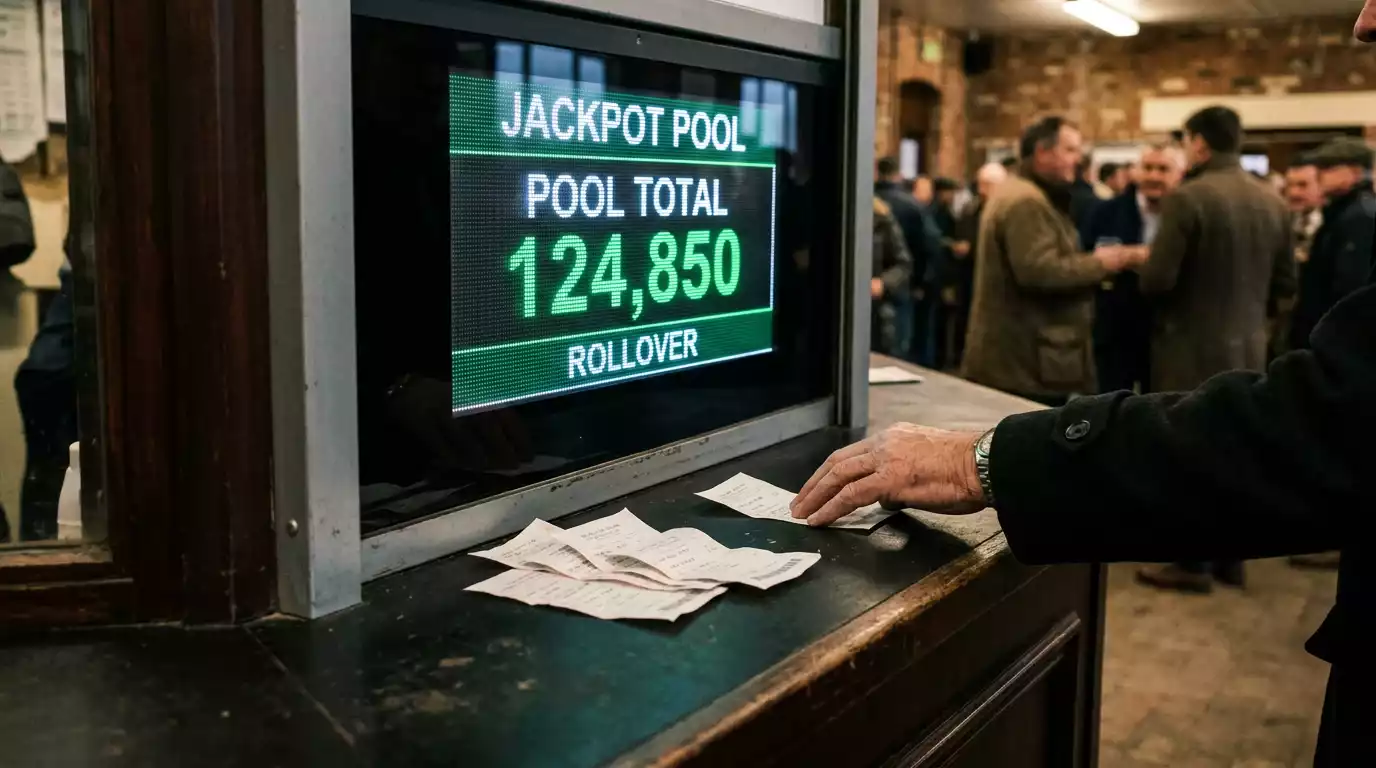
The banker concept in multi-race exotics is the equivalent of keying in a single-race product. A banker leg – one selection in a Placepot or Scoop6 race – keeps the permutation count flat at that stage, acting as a multiplier of 1 instead of 2, 3, or more.
The average Placepot dividend of approximately £407 provides context for banker decisions. If your total perm costs £50 and the dividend lands at £407, your net profit is £357. If over-perming pushes your cost to £150 for broader coverage, the same £407 dividend yields only £257 profit. Bankers keep costs down and return-on-investment up.
Identifying banker legs in multi-race exotics follows the same logic as keying in single-race bets. You look for races with a stand-out place candidate – a short-priced favourite with a strong placing record, a proven course-and-distance performer, or a horse dropping in class with form that towers over the opposition. The confidence threshold for a Placepot banker is lower than for an Exacta key, because the Placepot only requires a place rather than a specific finishing position.
I use at least three banker legs in every Placepot and Scoop6 entry. If I cannot identify three races where a single selection feels reliable, I question whether the card is suitable for a multi-race exotic at all. Some days the form simply does not support the banker approach, and the cost of broad coverage across every leg exceeds the expected dividend. Those are days to skip the Placepot and focus on single-race exotics instead.
When a Key Horse Approach Beats Boxing
The answer is almost always. At Royal Ascot 2025, World Pool Win dividends exceeded SP in 20 of 35 races – indicating that pool products systematically reward correct selections. A keyed structure that correctly identifies the top finisher and covers the remainder cheaply captures that pool premium efficiently. A full box, by contrast, spreads the cost across every possible finishing order, diluting the return per pound staked.
Boxing beats keying in one specific scenario: when you genuinely cannot separate your selections. If three horses have near-identical form claims and any of them could realistically win, keying one on top and missing is more expensive (in terms of opportunity cost) than boxing all three. A three-horse Exacta box costs 6 combinations – manageable. A three-horse Trifecta box costs 6 combinations (if you are boxing only three). The box makes sense when your conviction is about the group rather than any individual.
But the moment you have a stronger view on one horse than the others – even slightly – keying becomes the better structure. A keyed Trifecta with one horse on top and four others in second and third costs 12 combinations versus 60 for a five-horse box. The keyed structure only fails if your top selection does not win; the box fails only if all three placed horses come from outside your five. Most of the time, the key horse’s superior probability of winning outweighs the risk of losing every combination if it does not.
The broader framework for deciding when to key, box, or wheel – and how to integrate that decision with race selection and bankroll management – is covered in the exotic bet strategy guide.
How confident should you be in a horse before making it your exotic key?
Confidence should be based on form evidence, not gut feeling. A suitable key horse has a strong recent record in the relevant finishing position, fits the race conditions, and stands out from the rest of the field on objective criteria. If you would back the horse at odds-on in the Win market, it is a strong key candidate. If your confidence is marginal, a wider structure like a box or part-wheel may be more appropriate.
Can you key a horse in both first and second position in a Trifecta?
Not simultaneously – a horse can only finish in one position. However, you can create two separate keyed Trifecta structures: one with the horse keyed to win and others filling second and third, and another with the horse keyed in second and others filling first and third. This covers both scenarios at the cost of two separate sets of combinations.
How does keying a favourite affect the expected exotic payout?
Keying a heavily backed favourite tends to produce lower dividends because many other punters also include that horse in their combinations. The pool is shared among more winning tickets when the favourite finishes where expected. Keying a less obvious selection – a horse you rate higher than the market suggests – can produce larger dividends because fewer other tickets will match your combination.
Written by the editors at Exotic Bets Horse Racing.