Placepot Betting: Strategy, Perm Costs and Payout Data for the UK’s Biggest Exotic
 Available in US
The Placepot turned me from a race-by-race bettor into someone who engages with an entire afternoon’s card. That sounds like a small shift, but it changed the way I think about horse racing betting entirely. Instead of isolating one race, picking a winner, and then either celebrating or moving on, the Placepot forces you to assess six races as a connected puzzle — each leg contributing to or undermining the whole. It is the bet that taught me patience, and the bet that has produced my most memorable returns.
Kev Matthews, Head of Racing at the Tote, captured the appeal perfectly: “Days like this are what the Tote Placepot is all about — a small stake can lead to a life-changing return.” He was talking about a festival day where the dividend cleared five figures, but the principle applies to any meeting. The average Placepot dividend across UK racing sits at 407 pounds. The record — 182,567.80 pounds from a two-pound stake at the 2019 Cheltenham Festival — shows just how high the ceiling can go when results fall in an unexpected pattern.
This guide covers everything you need to approach the Placepot as more than a casual flutter: how the bet works mechanically, what your permutations will cost, what the payout data tells us about where value concentrates, and a framework for building Placepots that balance coverage against budget. If you are already familiar with how exotic bets work in UK horse racing, this is the deep dive into the single most popular exotic in the country.
Table of Contents
- How the Placepot Works: Six Races, Place Terms, One Pool
- Perm Costs: How Much Your Placepot Will Cost
- Placepot Payout Data: Averages, Records and Festival Dividends
- Building a Placepot: Banker Legs, Spread Legs and the Cover Balance
- Festival Placepots: Cheltenham, Ascot and Aintree in Numbers
- Five Common Placepot Mistakes and How to Avoid Them
- Placepot Betting Questions Answered
How the Placepot Works: Six Races, Place Terms, One Pool
Six races, one horse to place in each, and a shared pool that divides the spoils among everyone who survives all six legs. That is the Placepot in its simplest form — but the details matter, because the place terms, the pool mechanics, and the leg-by-leg survival dynamic all shape how you should construct your bet.
The Placepot covers the first six races on a card. You select at least one horse in each race to finish in a place position — the definition of “place” follows standard each-way terms. In races with eight or more runners, your horse needs to finish in the first three. In races with five to seven runners, the first two. In races with four or fewer runners, your horse must win. Handicaps of 16 or more runners extend place terms to the first four, which is a significant detail for festival and big-Saturday Placepots where large-field handicaps are common.
Your stake enters the Placepot pool along with every other punter’s stake. After the sixth race, the Tote deducts its commission from the total pool, and the remaining net pool is divided among all surviving unit stakes — those that had a placed horse in every one of the six legs. If your selections placed in all six races, you receive your share of the dividend. If any one leg fails, your entire entry is eliminated. There is no consolation prize for getting five out of six. For a closer look at how Tote pool commission and dividends work across all exotic products, see our dedicated guide.
The all-or-nothing structure is what creates both the excitement and the value. Because every leg is a filter that eliminates a portion of the entries, the pool of surviving tickets shrinks progressively through the afternoon. By the fifth and sixth legs, relatively few entries remain, and any unusual result — a well-fancied horse failing to place, a long shot running into the frame — can dramatically reduce the number of winning tickets and inflate the dividend for those who remain.
This is also why the Placepot rewards a different kind of thinking than single-race betting. You are not looking for winners; you are looking for horses that will place. A horse that runs a solid third from an unfavourable draw is just as valuable in the Placepot as the race winner. The skill is in identifying reliable place candidates rather than outright winners, which shifts the analytical emphasis toward consistency, course suitability, and jockey intent rather than raw ability.
Perm Costs: How Much Your Placepot Will Cost
Permutation costs catch more Placepot beginners off guard than anything else about the bet. The maths is simple multiplication, but the numbers escalate fast when you start adding extra selections in multiple legs.
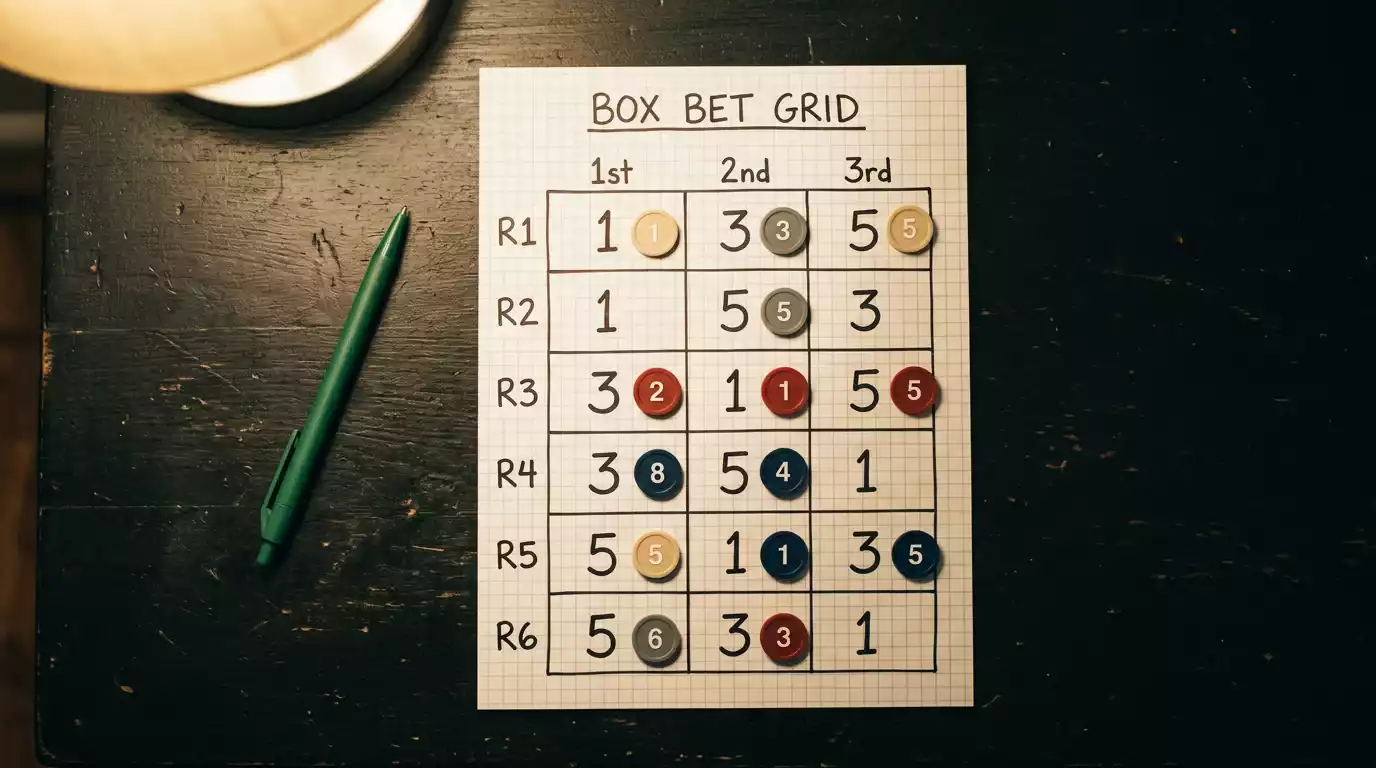
The total number of permutations is the product of your selections in each leg. If you pick one horse in each of the six races, you have 1 x 1 x 1 x 1 x 1 x 1 = 1 line. At a one-pound unit stake, that costs one pound. Simple, cheap, and requiring all six of your single picks to place — a long shot, but an affordable one.
Start adding coverage and the cost climbs. Two horses in three legs and one in the other three: 2 x 2 x 2 x 1 x 1 x 1 = 8 lines, 8 pounds. That is still very manageable. But a typical Saturday Placepot where you want genuine coverage might look like this: 2 x 3 x 1 x 2 x 3 x 2 = 72 lines, 72 pounds at a one-pound stake. Drop the unit stake to 50p and you are at 36 pounds, but you have halved your potential return per line.
The danger zone starts when you go wide in multiple legs. Three selections in each of six races: 3 x 3 x 3 x 3 x 3 x 3 = 729 lines. At a one-pound stake, that is 729 pounds — far more than most punters should be spending on a single Placepot. At 10p per line, it is 72.90 pounds, which is more reasonable but produces a proportionally smaller payout per line.
My approach is to set a target spend per Placepot before I start selecting horses. For a standard Saturday, my budget is 20 to 50 pounds. For a festival day, I might go up to 80 or 100 pounds. Once the budget is set, I work backwards: how many permutations can I afford at a stake level that produces a meaningful return if I hit? A 50-pound budget at a one-pound stake gives me 50 permutations to work with. That might be 2 x 1 x 5 x 1 x 5 x 1 = 50 lines — one banker in each of three legs and wider coverage in the three races I find most open.
The relationship between unit stake and perm count is the key trade-off. More perms at a lower stake gives you better coverage but a smaller share of the dividend per winning line. Fewer perms at a higher stake concentrates your risk but amplifies your return. There is no universally correct answer — it depends on the card, your confidence level in each leg, and your overall bankroll — but I lean toward fewer perms at higher stakes when I have strong views, and broader perms at lower stakes when the card is genuinely open.
Placepot Payout Data: Averages, Records and Festival Dividends
The average Placepot dividend of 407 pounds is a useful benchmark, but averages can mislead. The distribution is heavily skewed: most Placepot dividends fall in the 20-to-200-pound range, but a small number of massive payouts pull the average up. Festival meetings, big Saturdays, and cards where one or two unexpected results survive through the later legs produce the headline-grabbing dividends that define the Placepot’s reputation.
The record stands at 182,567.80 pounds from a two-pound unit stake at the 2019 Cheltenham Festival. That afternoon, results went against the market in several legs, eliminating the vast majority of entries and leaving a tiny number of surviving tickets to share the pool. The combination of a deep festival pool and a high elimination rate produced a dividend that most Placepot players will never see again — but it illustrates the theoretical ceiling when conditions align.
More recently, the Friday Placepot at Royal Ascot 2025 delivered a dividend of 26,424.30 pounds from a pool of 479,524.83 pounds. That is a more realistic illustration of what a premium meeting can produce: not a six-figure outlier, but a five-figure return from one of the deeper Placepot pools of the season. The pool size at Ascot reflects both domestic and on-course participation, and the dividend reflects a card where enough results went against expectations to thin the field of surviving entries.
Everyday meetings produce more modest but still worthwhile dividends. A competitive Saturday at Newbury or Haydock might deliver a Placepot dividend in the 100-to-500-pound range. Midweek meetings tend to produce lower dividends because the pools are smaller and the fields less competitive, though occasional surprises can still create outsized payouts when a well-fancied horse fails to place in one of the later legs.
The data tells a clear story about where Placepot value concentrates: at meetings with deep pools and competitive, larger-field racing. Festival weeks are the peak, followed by heritage-race Saturdays and any card where the six Placepot races include two or more handicaps with 12-plus runners. These are the conditions that produce the highest dividends and the most favourable risk-reward profile for the Placepot bettor.
Building a Placepot: Banker Legs, Spread Legs and the Cover Balance
I learned the hard way that a Placepot is not six independent bets stitched together. It is a single bet with six interconnected legs, and the way you allocate your coverage across those legs determines your cost, your survival probability, and your expected return. The best Placepot builders I know treat the six-leg structure as a resource allocation problem, not a form-study exercise.
Every leg falls into one of three categories. A banker leg is a race where you are confident one horse will place. You use a single selection, keeping the perm count low and saving your budget for legs where you need more coverage. Banker legs work best in small-field conditions races with a dominant favourite, or in races where one horse’s form profile — course winner, jockey booking, fitness edge — gives it a near-certain place chance regardless of how the race unfolds.
A contention leg has two realistic place candidates who you genuinely rate. You use two selections. This is the most common leg type on a typical card — races where the form narrows the frame to a shortlist but you cannot confidently single out one horse above the others. Two selections in a contention leg doubles the perm cost from that leg but significantly improves your survival probability.
A spread leg is an open race with no clear standout for a place. You use three, sometimes four, selections. Big-field handicaps with competitive form and no obvious place bankers are classic spread legs. These are the legs that drive your perm cost up, so they need to be balanced by banker legs elsewhere on the card. If you find yourself wanting to spread three or four legs out of six, the card may not suit a Placepot at all — the cost of adequate coverage exceeds what the expected dividend can justify.
My standard Saturday Placepot structure: two banker legs, two contention legs, two spread legs. That gives a perm count in the range of 1 x 1 x 2 x 2 x 3 x 3 = 36 lines, or variations around that number depending on the specific card. At a one-pound stake, that is 36 pounds — a reasonable outlay for a bet with an average dividend of 407 pounds and a much higher ceiling at quality meetings.
The critical discipline is honesty about your banker selections. If you force a banker in a leg where you do not genuinely have a strong view, you save money on perms but expose yourself to elimination in a race where the outcome is uncertain. Better to acknowledge uncertainty, use two or three selections, and protect your entry through that leg than to artificially narrow your coverage for the sake of a cheaper perm.
Festival Placepots: Cheltenham, Ascot and Aintree in Numbers
Festival Placepots operate on a different scale to anything else in the UK pool calendar, and the numbers reflect that. The pools are deeper, the fields are larger, the form is harder to separate, and the dividends can be extraordinary. But the cost of adequate coverage is higher too, which means festival Placepots require a different budgeting approach than a standard Saturday entry.
Cheltenham is the pinnacle. The Festival runs over four days, each with a seven-race card, and the Placepot covers the first six races each day. The fields are universally competitive — there are no soft banker legs at Cheltenham. Every race features horses who have been specifically targeted at the meeting, trained to peak on the day, and the form book is an unreliable guide because so many runners are improving or encountering new conditions. That unpredictability is precisely what drives the Placepot dividend up. The 2019 record payout of 182,567.80 pounds came from a Cheltenham card where multiple results defied market expectations, eliminating the vast majority of entries and concentrating the pool among a tiny number of survivors.
Royal Ascot produces the deepest Placepot pools of the flat season. The Friday of Royal Ascot 2025 saw a Placepot pool of 479,524 pounds and a dividend of 26,424.30 — numbers that dwarf anything you will see at a standard Saturday meeting. The combination of on-course attendance, festival atmosphere, and casual participation swells the pool, while the competitive nature of the racing ensures that not every leg is predictable. Ascot Placepots tend to produce more moderate dividends than Cheltenham because the flat form is slightly more reliable, but the pool depth means the absolute payouts are still substantial.
Aintree’s Grand National meeting offers a unique Placepot profile. The three-day meeting features a mix of high-quality graded races and competitive handicaps, with the Grand National itself — 40 runners, extended place terms — often falling within the Placepot races on Saturday. The National is a natural spread leg: with 40 runners and a gruelling test of stamina and jumping, the range of possible place finishers is enormous. I typically use four or five selections in the National leg and tighten my coverage in the earlier races to manage the perm cost.
Across all three festivals, the same principle applies: increase your budget, expect to use more selections per leg, and accept that the perm cost will be higher than a standard card. The trade-off is that the potential dividend justifies the elevated spending. UK racecourse attendance recovered to 5.031 million in 2025 — the first time it has cleared five million since 2019 — and that footfall translates directly into Placepot pool depth at festival meetings where on-course betting is heaviest. A 100-pound festival Placepot that hits a dividend of 5,000 pounds is a better return on investment than a 30-pound Saturday Placepot that pays 200 pounds. The festivals are where the Placepot earns its reputation, and where the serious Placepot player concentrates their resources.
Five Common Placepot Mistakes and How to Avoid Them
Eleven years of Placepot betting has given me a front-row seat to every way this bet can go wrong. These are the five mistakes I see most often — and, honestly, the five mistakes I made myself before developing a more disciplined approach.
Over-perming every leg. The instinct to maximise coverage by using three or four selections in every leg is understandable but financially destructive. Three selections in each of six legs costs 729 lines. At a one-pound stake, that is 729 pounds for a single Placepot. The average dividend of 407 pounds means you need an above-average result just to break even. Discipline means identifying which legs genuinely need broad coverage and which can be bankered — then letting the card dictate the structure, not your anxiety about elimination.
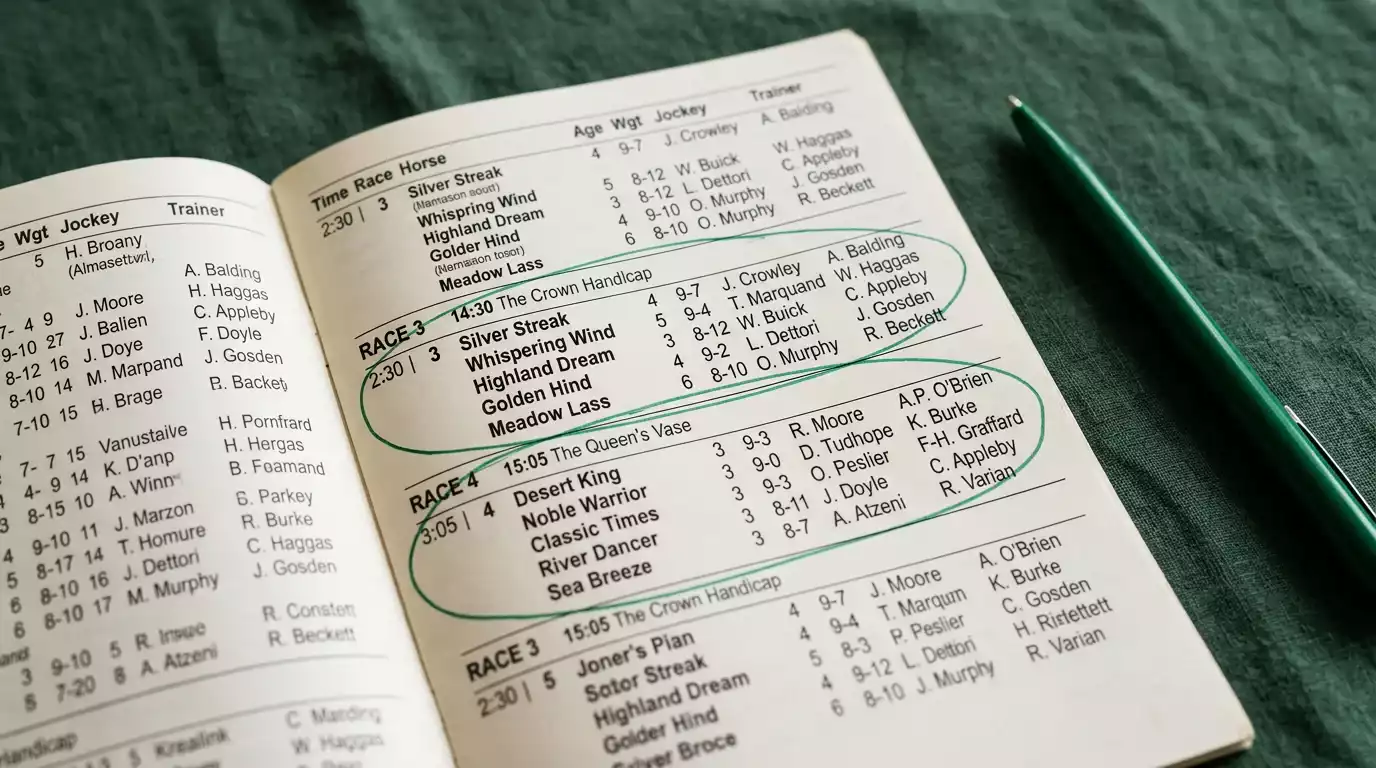
Treating every horse as a place contender. In a 12-runner handicap, not every horse has a realistic place chance. Some are out of form, some are on the wrong ground, some have jockeys whose intent is clearly a prep run for a future target. Narrowing the place frame by eliminating no-hopers is as important as identifying the horses you want to include. I aim to reduce each leg to a shortlist of four or five genuine place candidates before deciding how many to use in my Placepot.
Ignoring place terms. The Placepot pays on place, not win, and the place terms vary by field size. In a race with five runners, your horse must finish first or second — effectively a win-or-bust scenario. In a 16-runner handicap, the first four count. Failing to adjust your expectations for each leg based on the applicable place terms leads to poor selection and wasted perms. A horse that consistently finishes third or fourth is gold in a big-field handicap leg but worthless in a five-runner conditions stakes where only the first two count.
Chasing the previous week’s dividend. A 3,000-pound Placepot dividend on one Saturday does not mean the next Saturday will produce anything similar. Dividends depend on results, pool size, and the number of surviving entries — all of which vary by card. Set your budget based on the meeting quality and your form analysis, not on what last week’s Placepot paid.
Forgetting to check non-runners. Non-runners after you have placed your Placepot entry result in your stake being transferred to the favourite in that leg (or in some cases the second favourite, depending on the Tote’s rules at the time). If your selection is a non-runner and you had a banker in that leg, you are now relying on the market favourite to place — which may or may not align with your form view. Checking for non-runners before the first race and having a contingency plan for late withdrawals is a basic Placepot discipline that too many punters overlook.
Placepot Betting Questions Answered
What happens if a race in the Placepot is abandoned or void?
If a race in the Placepot is abandoned or declared void, that leg is treated as if all entries survived. Every remaining ticket passes through the voided leg automatically. The Placepot then settles on the results of the remaining five legs. This can reduce the dividend because no entries are eliminated in that leg, meaning more surviving tickets share the pool.
How is the Placepot dividend calculated when multiple punters win?
After the sixth race, the Tote deducts commission from the gross pool. The remaining net pool is divided equally among all surviving unit stakes — those that had a placed horse in every one of the six legs. If the pool contains 100,000 pounds after commission and 200 winning units survive, each unit pays 500 pounds. The dividend is expressed per one-pound unit stake, so a two-pound stake would return double the published dividend.
Can you play the Placepot online through Tote and bookmaker apps?
Yes. The Placepot is available through the Tote website, the Tote app, and through several major bookmakers who offer Tote pool betting as part of their platform. Not every bookmaker carries the Placepot, so a Tote account is the most reliable way to guarantee access. On the Tote app, you can build your Placepot leg by leg, see your total perm count and cost before confirming, and monitor indicative dividends as the pool develops.
What is the minimum Placepot stake and how does it affect perm cost?
The minimum unit stake for a Placepot is typically one pound per line through the Tote, though some platforms allow lower unit stakes of 50p or even 10p per line for permed entries. A lower unit stake lets you increase coverage by including more permutations within the same budget, but it reduces your return per winning line proportionally. A 50p unit stake with 100 lines costs 50 pounds total but pays half the published dividend per winning line.
Created by the ”Exotic Bets Horse Racing” editorial team.