Tricast vs Trifecta: Why Pool Payouts Average 26% More in UK Racing
 Available in US
I have a spreadsheet that has followed me across three laptops now. It tracks every race where I placed both a Computer Straight Tricast through a bookmaker and a Tote Trifecta on the same combination. The sample is not academic – it is 187 races over four years, weighted towards feature meetings. The headline figure from my own data closely mirrors what the professionals found when they ran the same comparison across a much larger set: the Tote Trifecta pays more, consistently, and by a margin that should make any serious exotic punter reconsider their default choice.
An analysis of 1,011 UK races by the team at Geegeez showed the Trifecta outpaying the Tricast by an average of roughly 26%, with the pool product delivering more in four out of every five races sampled. That is not noise. That is a structural edge baked into the mechanics of how each product calculates its return.
How the Computer Straight Tricast Is Calculated
The first time someone explained the CST formula to me, I asked who decided it should work that way. Nobody had a satisfying answer. The Computer Straight Tricast is a fixed-odds payout derived from a formula that uses the starting prices of the first three finishers plus adjustments for field size. The calculation runs automatically after the result is confirmed, and the bookmaker settles every CST ticket to the same figure.
Like its two-horse cousin the CSF, the Tricast formula inherits the biases of the SP market. If the favourite has been hammered down to a very short price, the CST for any combination involving that horse gets compressed. The formula also applies diminishing returns as the finishing order becomes more predictable – a 2/1, 5/1, 8/1 result in a twelve-runner handicap produces a decent CST, but it rarely reaches the heights that the raw odds might suggest when multiplied together.
The formula is proprietary and not transparent to the average punter. You cannot easily replicate it at home before the race to estimate your return. You back the combination, the race runs, and the CST settlement appears in your account. This opacity is fine when the product pays fairly. The question is whether it does.
One practical point: the CST is available on most UK races with eight or more runners. Bookmakers activate it automatically, and the minimum stake is typically low – 10p per combination in many cases. The accessibility is a genuine advantage for punters who want first-three-in-order coverage without seeking out a separate pool betting platform.
How the Tote Trifecta Derives Its Dividend
The Trifecta pool works on the same principle as every other Tote product. All stakes go in, commission comes off the top, and the net pool is split among winning unit stakes. For the Trifecta, you need the first three finishers in the correct order – identical to the Tricast in its selection requirement.
Where it diverges is in the payout engine. The Trifecta dividend is not anchored to starting prices. It is determined entirely by the ratio between the total net pool and the number of winning units. A race where only a handful of punters nailed the correct first-three order produces an enormous dividend, regardless of what the SPs were. Conversely, a result that half the pool predicted will pay modestly even if the individual horses were not short-priced.
This means the Trifecta rewards contrarian thinking more directly than the Tricast does. The CST formula treats a 10/1 shot the same way whether one person or a thousand people backed it in that position. The Trifecta pool, by contrast, pays more when fewer people got it right – because the same net pool is being divided among fewer winning tickets. Dead money from incorrect combinations inflates the dividend for those who were correct, and in Trifecta pools specifically, the sheer number of possible combinations means that the proportion of dead money is typically very high.
1,011 UK Races: The Trifecta vs Tricast Payout Gap
The Geegeez study remains the most comprehensive public comparison available. Across 1,011 UK races, the Tote Trifecta paid more than the Computer Straight Tricast in approximately 80% of cases – four out of five. The average premium was around 26%. That is not a subtle statistical artefact; it is a gap wide enough to reshape how you allocate your exotic betting budget.
To put the 26% in concrete terms: if a CST returned £500, the Trifecta on the same race averaged around £630. Over a season of regular exotic betting, that difference compounds into real money. The edge is not theoretical – it reflects the structural mechanics of pool redistribution versus formula-based settlement.
The Grand National in 2021 offers one of the starkest individual examples. The Trifecta payout vastly exceeded the CST on the same finishing order, with the Exacta on that race similarly crushing the CSF at £2,053.30 versus £882.65. Aintree’s massive casual audience pumps dead money into the pool, and the exotic dividends balloon accordingly.
Not every race produces a 26% gap. The premium varies. In small fields with short-priced favourites filling the first three places, the Trifecta advantage narrows – sometimes the CST even edges ahead, because the pool dividend is diluted by a large number of winning tickets on the obvious result. But those races are precisely the ones where serious exotic punters should not be playing Trifectas in the first place. The product shines in competitive, open contests where the finishing order is hard to predict and the pool is flooded with losing combinations.
The 80/20 split is the number I keep coming back to. In four out of five races, the pool product paid more. That kind of consistency is rare in any form of betting, and it exists because of a structural feature – the redistribution of dead money – that the CST formula simply cannot replicate.
Race Conditions That Widen the Payout Gap
Not all races are equal when it comes to the Trifecta-Tricast spread. After years of watching the numbers, three conditions reliably widen the gap.
Field size is the most obvious driver. In races with 16 or more runners, the number of possible first-three permutations explodes – a 16-runner race has 3,360 possible Trifecta outcomes. The vast majority of those combinations attract zero or minimal pool money, which means the dead money percentage climbs steeply. More dead money means a bigger dividend for the few who guessed correctly. The CST formula, working from SPs alone, cannot capture this pool-specific inflation.
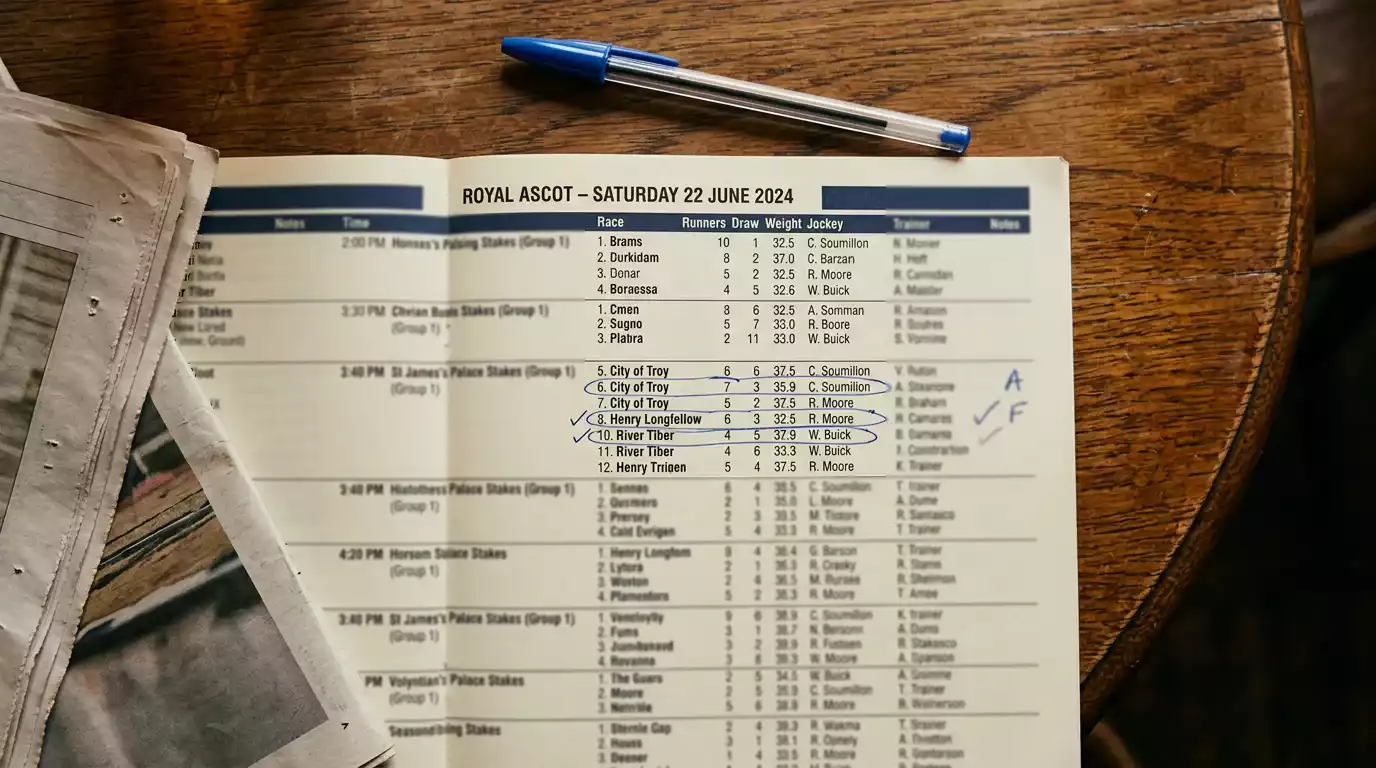
The second condition is the presence of casual or uninformed money. Festival meetings – Cheltenham, Royal Ascot, Aintree – draw punters who bet once or twice a year. They tend to box the top three in the market without much analysis, flooding obvious combinations and leaving value in everything else. At Royal Ascot 2025, the World Pool Trifecta beat the Tricast equivalent in 24 out of 35 races, a strike rate even higher than the overall 80% average from the Geegeez sample. The festival effect is real and measurable.
Third, races with genuinely open form – competitive handicaps, conditions races with evenly matched fields – tend to produce wider gaps. When form students disagree about the likely finishing order, the pool gets fragmented across many combinations. A fragmented pool means fewer winning tickets sharing the net pool, and that is where the Trifecta dividend pulls furthest away from the CST figure.
The inverse conditions compress the gap. Small fields, strong favourites, clear form lines. A six-runner Listed race where the first three in the betting finish in order will produce a modest Trifecta dividend, sometimes even below the CST, because a large share of the pool backed that result. These are races to avoid for Trifecta purposes. The smart play is to save your Trifecta stakes for the races where the pool mechanics work hardest in your favour – large fields, casual money, and open form – and default to the CST or skip the race entirely when conditions are unfavourable.
The 26% average edge is an aggregate. The skill is in identifying the races where the edge runs to 50%, 80%, or even more, and concentrating your stakes there. That is where the broader exotic strategy framework connects – race selection is the lever that turns a statistical advantage into a practical one.
Does the 26% Trifecta advantage hold across all race types or mainly handicaps?
The advantage is most pronounced in competitive handicaps with large fields, where dead money concentrations are highest. In small-field conditions races with strong favourites, the gap narrows and occasionally reverses. The 26% figure is an average across all race types, but the edge is not evenly distributed.
Are Tricast payouts ever better than Trifecta – and in what conditions?
Yes. The CST can outpay the Trifecta when a predictable result attracts heavy pool support, diluting the dividend. This tends to happen in small fields where a short-priced favourite wins and the placed horses were also well backed. In these cases, many winning Trifecta tickets share the pool, compressing the dividend below the formula-derived CST.
How do Trifecta rollovers affect the payout comparison?
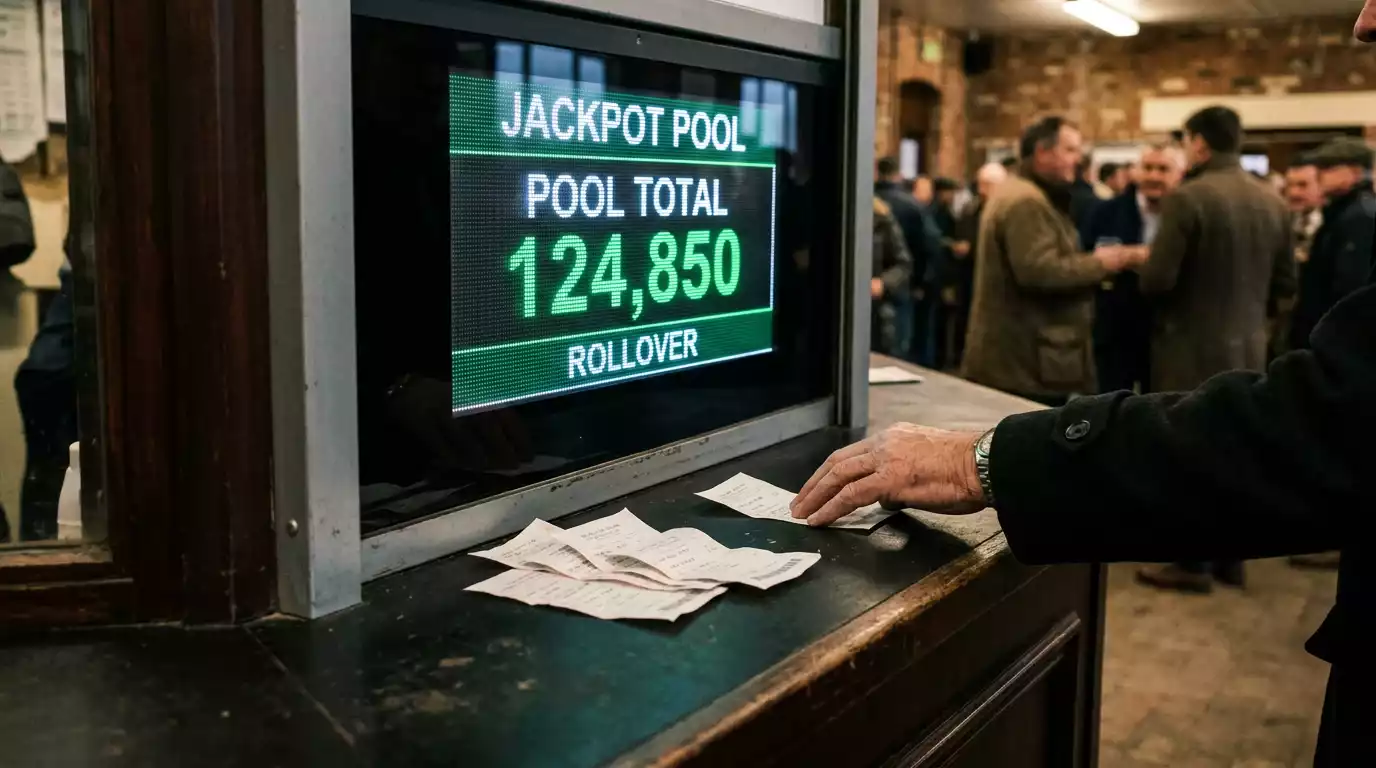
When a Trifecta pool is not won, the unclaimed money rolls into the next equivalent pool, inflating its size. A rollover pool contains carried-over dead money from a previous race, which can push the dividend significantly higher than both the normal Trifecta and the CST. Rollovers amplify the pool product’s structural advantage.
Prepared by the Exotic Bets Horse Racing editorial staff.